Sailing and Exploring Sulawesi: The Heart of the Coral Triangle
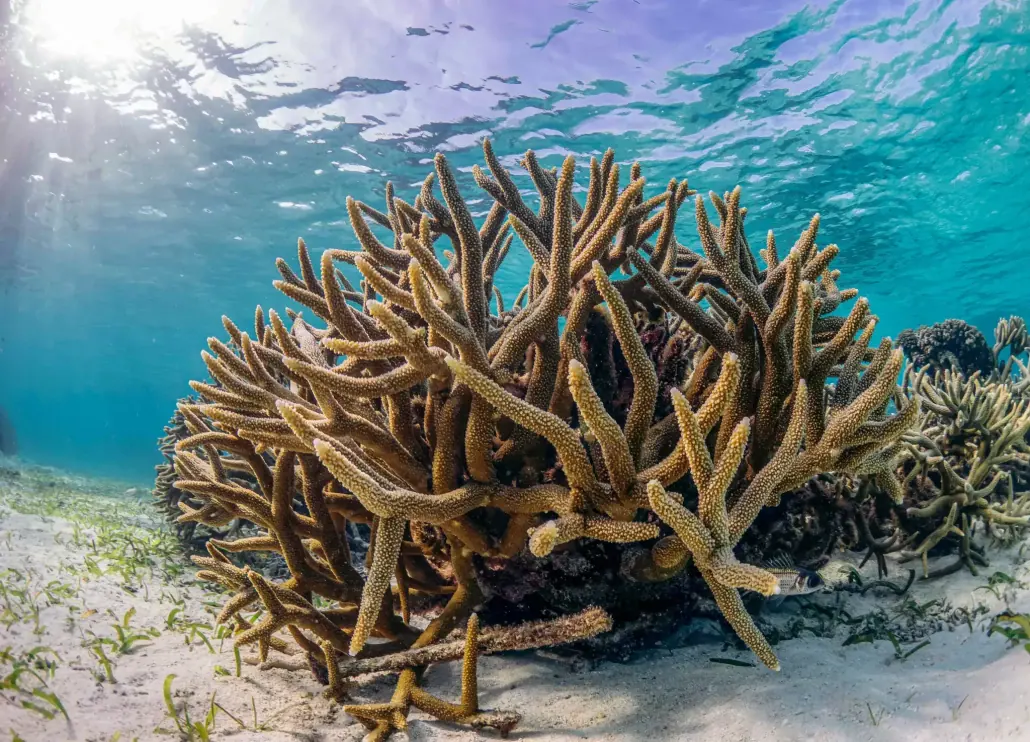 Nicole Helgason/SeaTrek Sailing Adventures
By Nicole Helgason
Sailing 16 days and more than 1,200 nautical miles from the northern tip of Sulawesi south to the famous Komodo National Park, our group traveled straight through the center of the Coral Triangle, the most biodiverse marine region on the planet, with stops at reefs so remote that some of the people we met had never seen tourists before. The Katharina, our liveaboard home for the journey, is a beautiful 38-meter wooden pinisi.
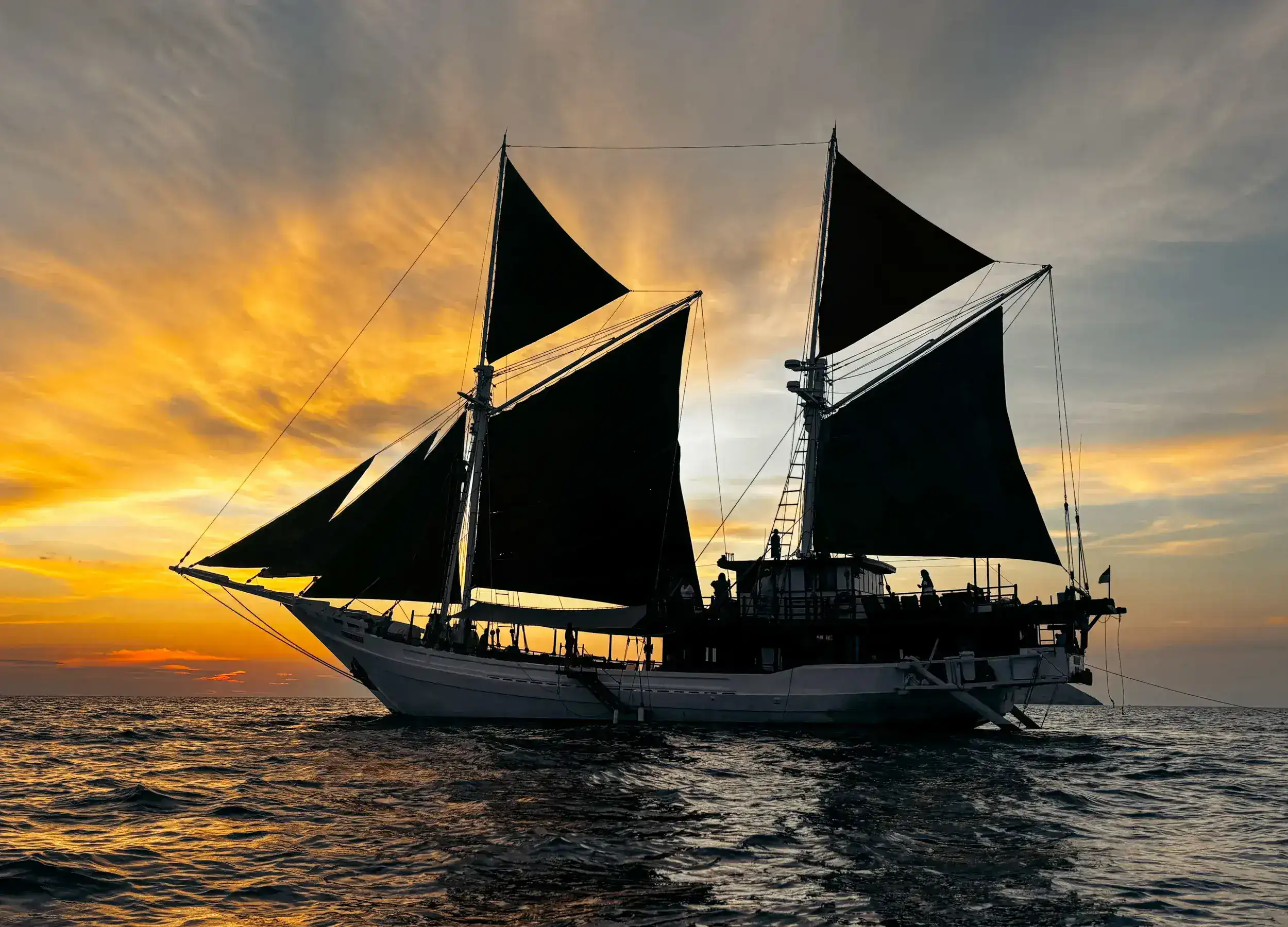
Katharina sails up with a sunset background. (RO Marks/SeaTrek Sailing Adventures)
Pulau Punten
We started this leg of our journey in North Sulawesi, around Lembeh Island, before an overnight trip 35 nautical miles down the coast for our first snorkeling stop at Pulau Punten. We spent the morning exploring shallow reefs only a meter or two deep, with large colonies of plating Acropora and massive corals like Porites and Dipsastraea with thousands of iridescent blue chromis. We snorkeled from west to east, and as the reef flattened out near the end, we were greeted by an anemone city with many different clownfish species.
We went back to the boat for lunch before spending the afternoon snorkeling the back side of the island, and it was magnificent. Near the far western point, we were greeted by a mountain of yellow toadstool leather corals before drifting behind the exposed side of the island, where the reef sloped away with huge colonies of plating Acropora, Isopora, and Porites boulders around 3 to 5 meters deep. It was the perfect first look at a healthy Indo-Pacific reef featuring all the growth forms we work so hard to recreate in our tanks, at full scale.
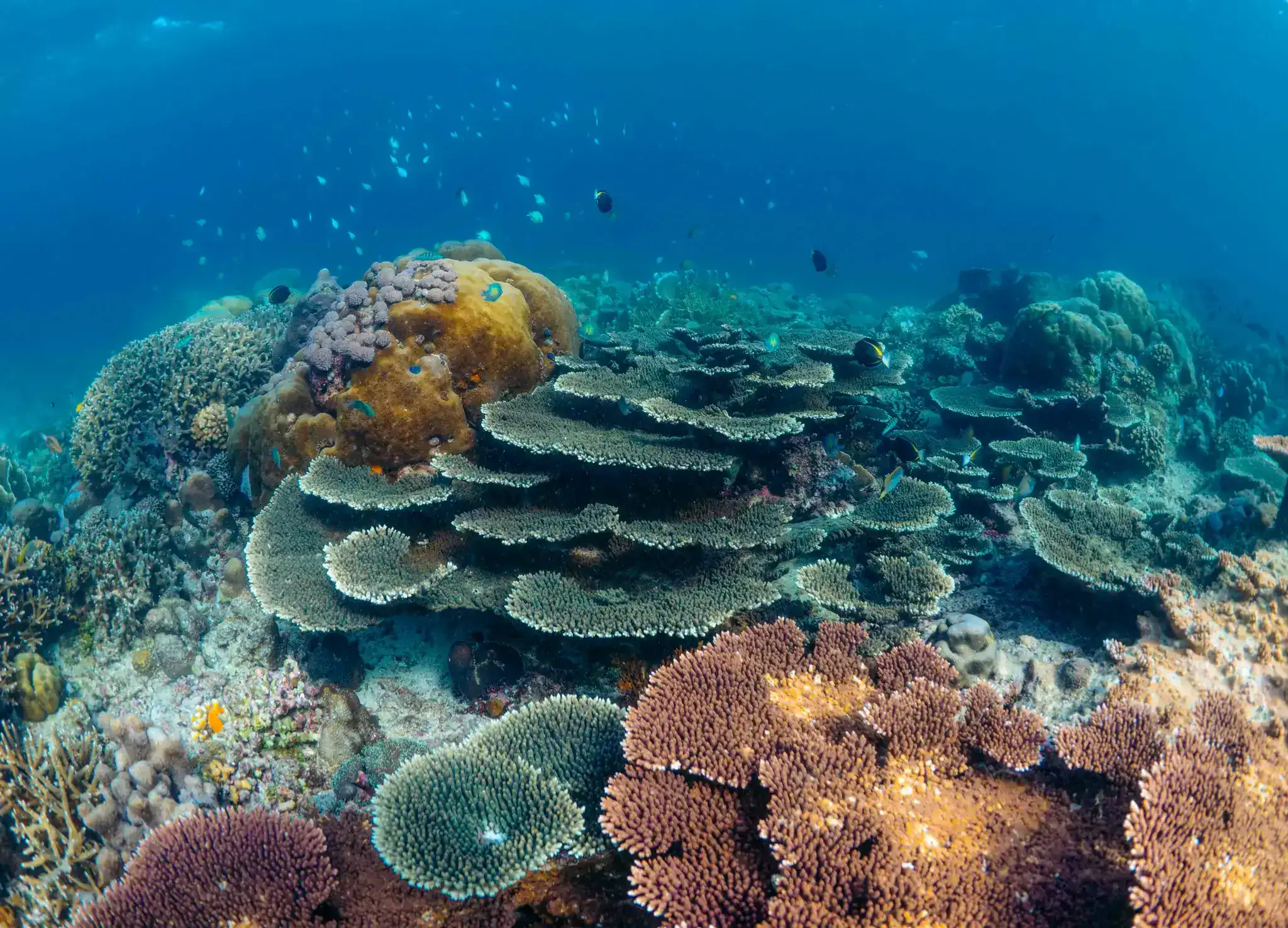
Coral in Punten Island. (Nicole Helgason/SeaTrek Sailing Adventures)
Overnight, we continued 100 nautical miles toward Gorontalo, where fishermen in the bay feed the juvenile whale sharks. We were able to get in the water to snorkel. It was impressive to see these big fish up close. They come right up to the edge of the fishermen’s boats inside the bay.
Crossing the Line
That evening, we set off on a 75-nautical-mile passage across the middle of the world. Lying in my bunk, I kept thinking how lucky I was to experience this surreal moment. We crossed the equator at 0.0° latitude just after midnight, from one hemisphere into the next. By morning, the Wi-Fi and cell signal were gone. We were off the grid in the Togean Islands, a remote archipelago of around 56 islands in the center of Tomini Bay, so isolated that some of its animals are found nowhere else on Earth.
We continued our circumnavigation of the Togeans along the southern coast. Our first stop was Kabalutan Village, famous for the Sama-Bajau, the sea nomad freedivers. These traditional fishermen hold their breath and dive down to hunt for fish, and studies have shown the Bajau have spleens that are specially adapted to this type of long breath-hold freediving.
We came to Kabalutan specifically to find Jago, the legendary freediver. Captain Jefri and our guide Dion went ashore first to see if he was open to having visitors, and Jago was home! We sat around on his front porch for half an hour, chatting with him and his family through two rounds of translation, from Bahasa Bajau to Bahasa Indonesia to English. Jago is now about 90 years old, and not many of the younger generation freedive anymore.
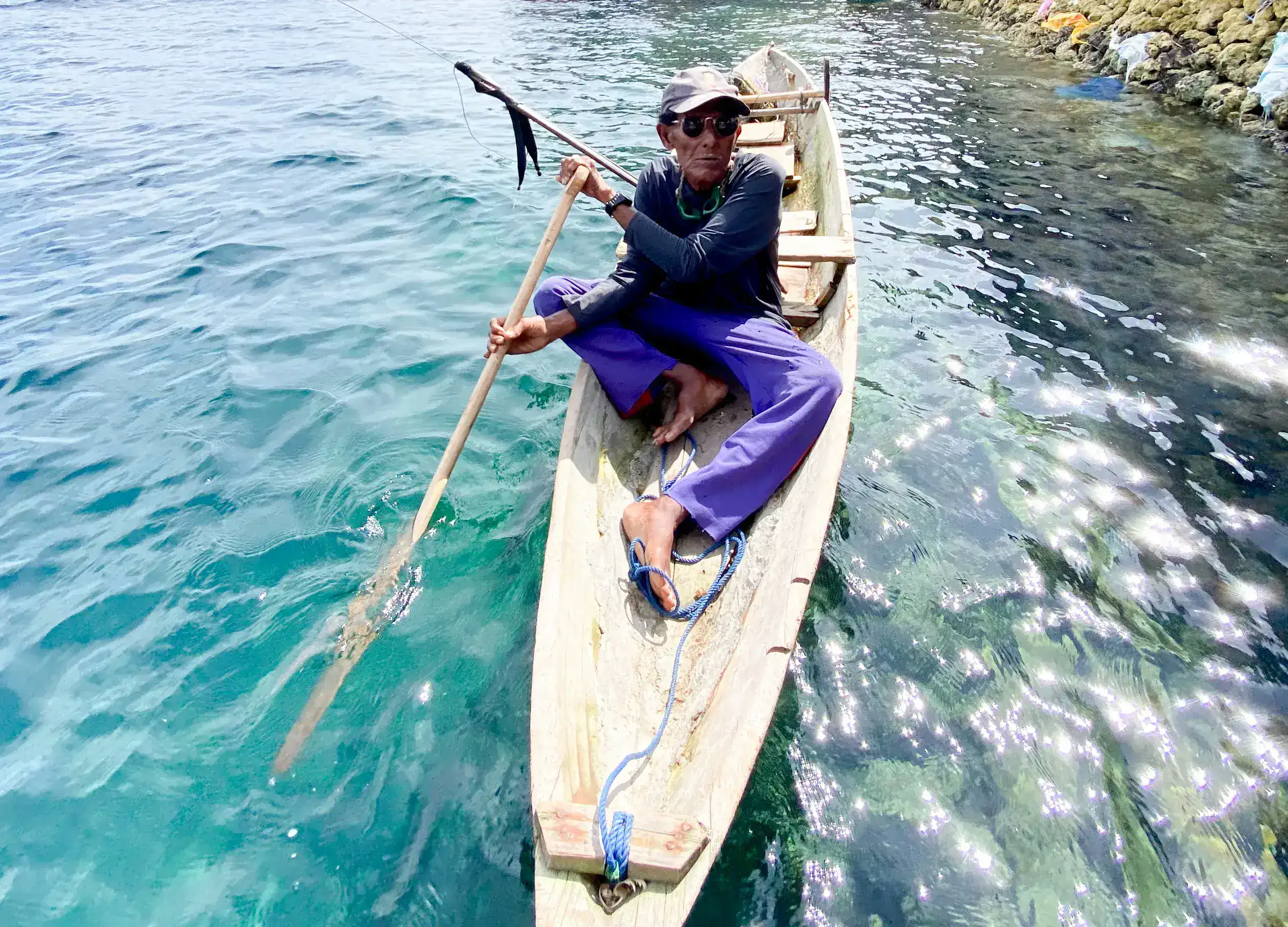
Jago, the Bajau People. (Dion Luas/SeaTrek Sailing Adventures)
Instead, they use hookah lines with air pumped down a hose from a small compressor on the boat, which is extremely dangerous, but the fishermen have to use it more and more because it takes longer to find fish. You can Google Jago: A Life Underwater to watch a film about Jago and the Bajau people.
After the village tour, we cruised 35 nautical miles to the southeast corner of the Togeans for our last snorkel in the archipelago. The Togeans have very special reefs, and it is one of the only places on the planet where you can study atoll, barrier, and fringing coral reefs all within the same area, an epicenter of biodiversity sitting dead center in the Coral Triangle, home to over 500 different species of reef-building corals and thousands of species of reef fish.
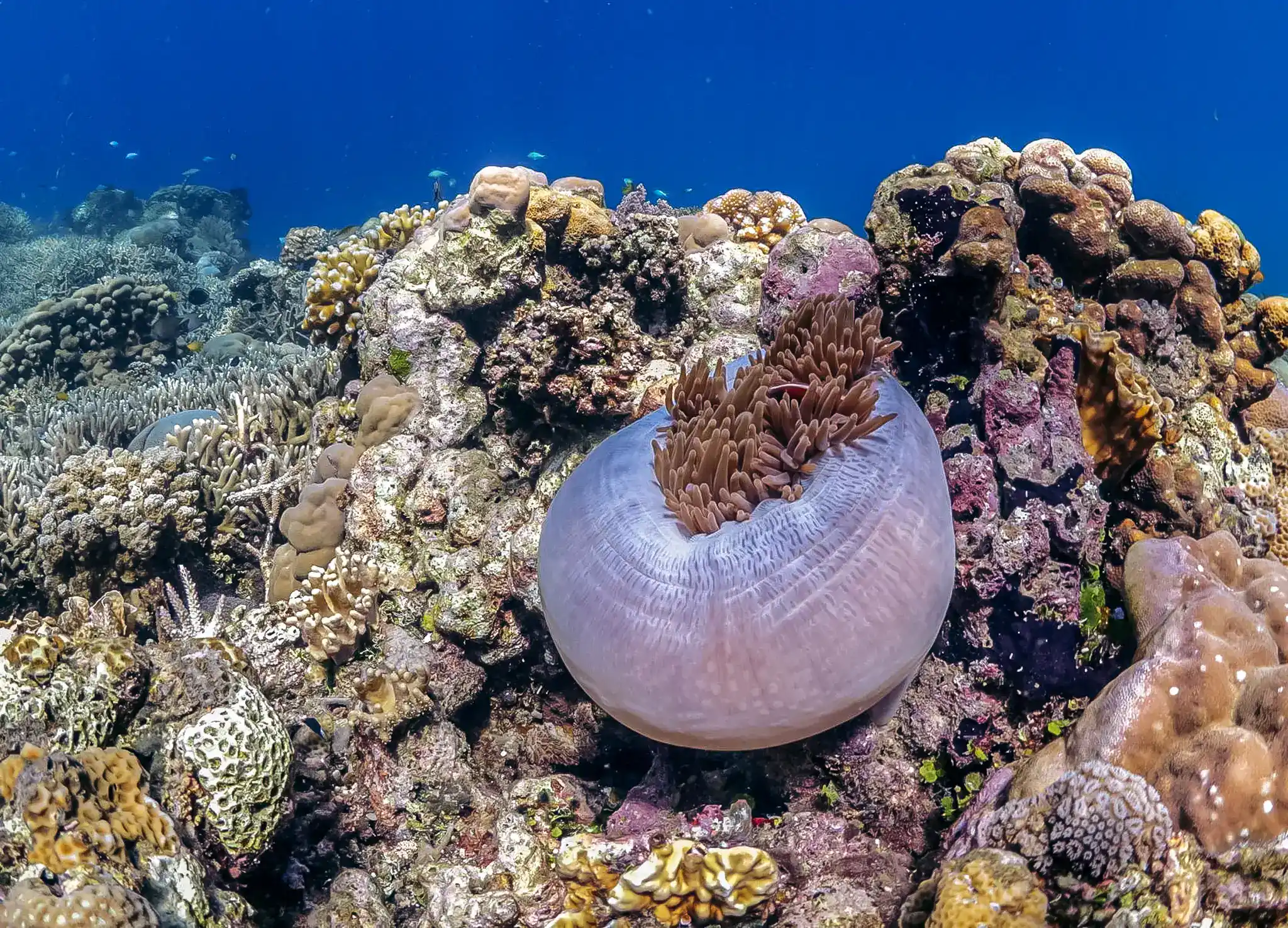
Coral life on Togean Island. (Nicole Helgason/SeaTrek Sailing Adventures)
As we floated over the fringing reef, the diversity was on full display: healthy stands of hard coral in the shallows with anemonefish tucked into their hosts, angelfish working the reef structure, an eel peeking out from the rock, and even a reef shark cruising past on the deeper edge. It was the perfect send-off from the Togeans, and then we continued south.
The Longest Crossing
In our longest crossing yet, we sailed more than 250 nautical miles toward Wakatobi National Park, across the Gulf of Tolo, where the Banda Sea drops to around 5,800 meters. I went to bed tucked in my bunk against the hull and listened to the lapping of the waves as I dreamed of the sea monsters lurking in the vast underwater world below.
Overnight, Captain Jefri brought us safely to the western side of Wakatobi. By sunrise, everything lined up perfectly for an exhilarating morning snorkel to get the blood pumping. With our boat floating safely offshore, Jefri positioned us perfectly behind the morning sun. He left the Katharina in the hands of the crew and hopped on the dinghy to join us in the water. You could tell by the smile on his face that this was going to be a good one.
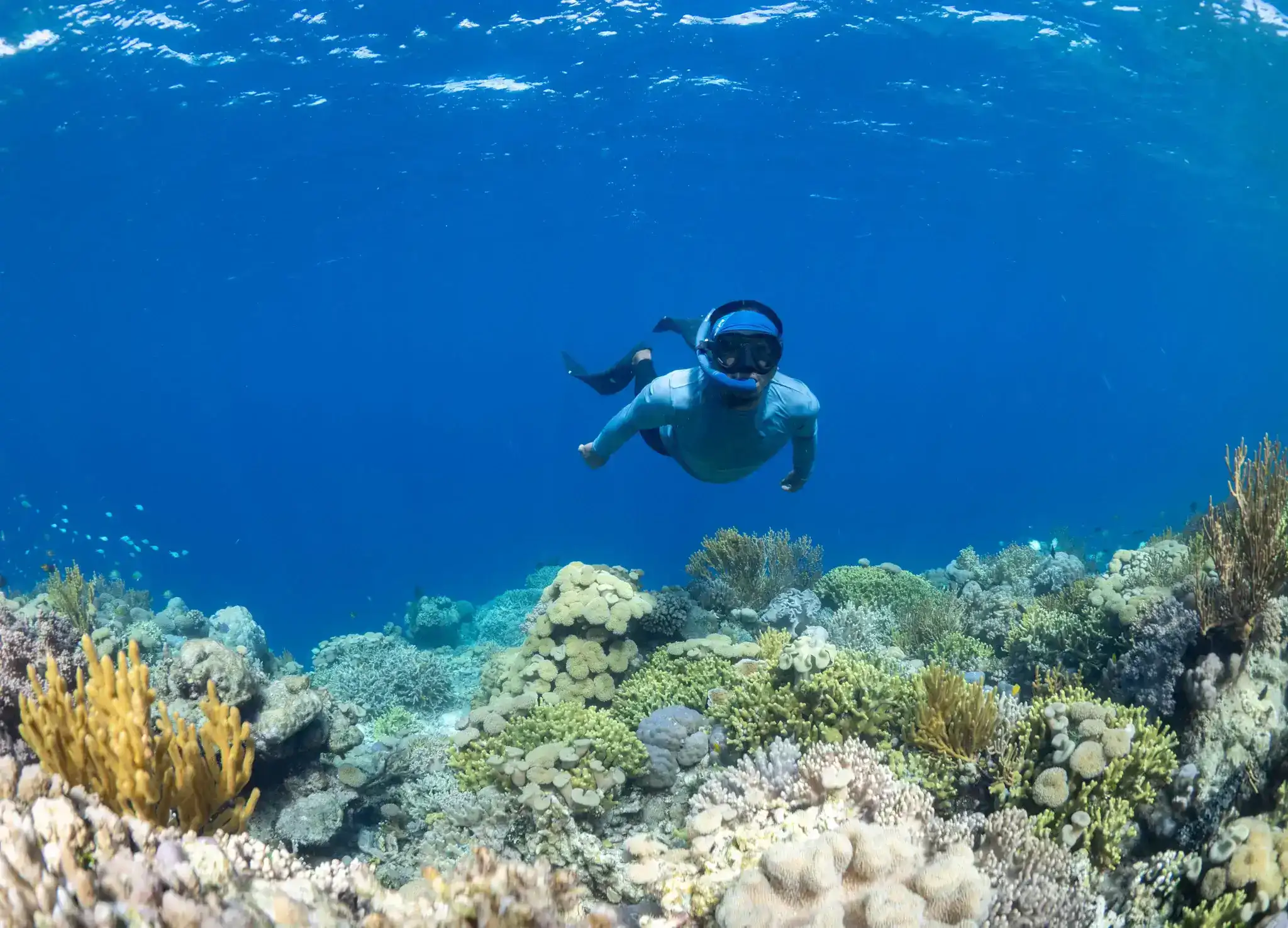
Captain Jefri is snorkeling in Wakatobi. (Nicole Helgason/SeaTrek Sailing Adventures)
Wakatobi is famous for dramatic wall dives and healthy corals. As we slipped into the water with the sun right behind us, this postcard of a tropical coral reef came to life. The first thing I noticed was the bright yellow gorgonian sea fans with the most spectacular deep-blue water behind them.
As we got a little closer to the edge, my heart skipped a beat as I swam over and stared straight down hundreds of feet into the abyss. The reef top was lush with soft corals and sea whips perched right on the precipice of the wall. With all the upwelling currents, these were some very happy corals.
Mixed in with the sea fans was a field of yellow leather corals, and a yellow-and-gray type of branching Porites. I even managed to find a strange-looking Acropora that I don’t think I’d seen before. We spent a good two hours swimming back and forth between the steep wall and the flat reef top before it was time to head back to the boat.
*To see the rest of the article, sign up for a free trial of TFH magazine and head to page 44.