7 Incredible Animals You Can See in Raja Ampat and How to Encounter Them Ethically
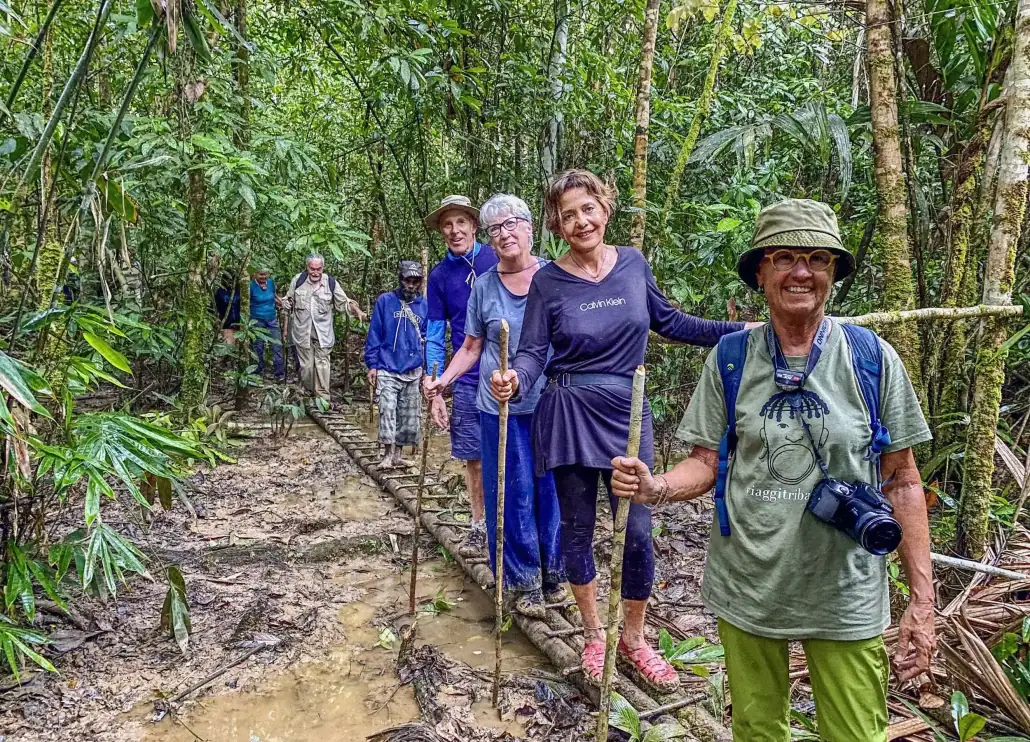 (Dion Luas/SeaTrek Sailing Adventures)
By Abd. Wahab
TLDR: Raja Ampat Wildlife at a Glance
- Birds of Paradise
- Whale Shark
- Stingless Jellyfish
- Coconut Crab
- Zebra Shark
- Reef Manta Rays
- Coral Reefs
If you are a person who travels for nature and wildlife, Raja Ampat should be at the top of your next dream destination. Often called a “piece of heaven in Indonesia,” this remote archipelago has beautiful landscapes and biodiverse ecosystem with endemic flora and fauna that are found nowhere else in the world.
Located in the heart of the Coral Triangle, Raja Ampat is a global center for marine biodiversity. It’s home to more than 75% of the world’s coral species and over 1,700 species of reef fish. Above the water surface, the islands are covered by lush rainforests that serve as a safe place for a diverse range of unique creatures, with over 482 bird species recorded, including two endemics: the legendary Red Bird of Paradise and Wilson’s Bird of Paradise.
Travelling here with SeaTrek Sailing Adventures, you will find yourself stepping into a living wildlife sanctuary. Every day brings the chance to witness nature’s wonders, from manta rays gliding beneath your snorkel mask to exotic birds performing mating dances at sunrise.
7 Raja Ampat Wildlife Encounters on Your SeaTrek Adventure
Raja Ampat promises you more than breathtaking scenery, more than an adventure, and more than a once-in-a-lifetime trip. It offers you a rare chance to connect with the wild.
Here are seven incredible animals you can find in Raja Ampat, along with what makes each of them so special and how to encounter them ethically.
1. Birds of Paradise – Raja Ampat’s Iconic Forest Dancers
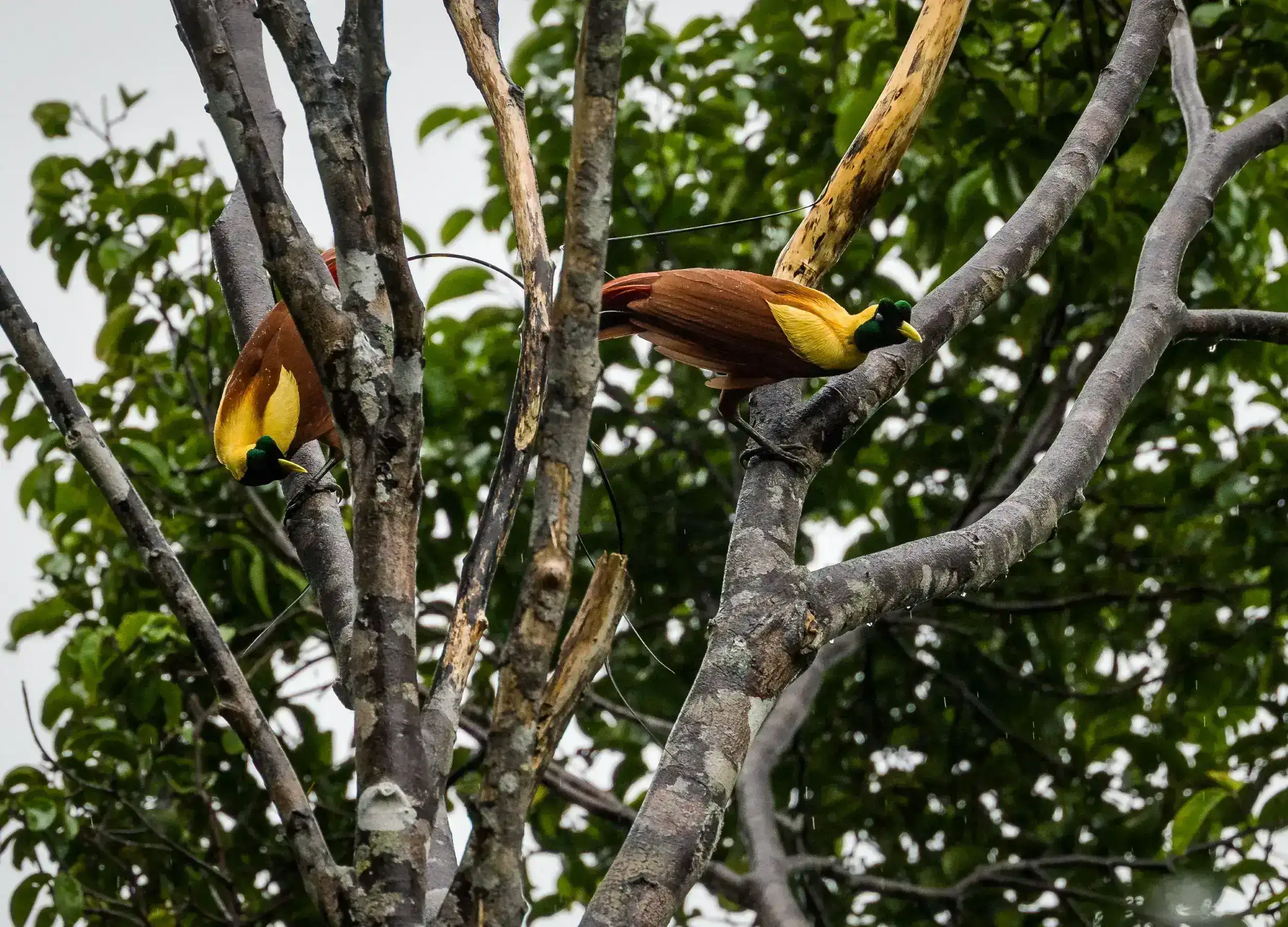
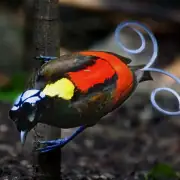
Red Birds of Paradise performing mating dance. (Peter McCarthy/SeaTrek Sailing Adventures)
Birds of Paradise is one of Raja Ampat’s most iconic wildlife encounters, a species so beautiful that early European explorers believed they were “birds of god.” These legendary birds, including the endemic Red Bird of Paradise and Wilson’s Bird of Paradise can only be seen in their native habitat in the local forest of Raja Ampat.
You are a lucky person to have the rare chance to witness this incredible bird. Finding them is not as easy as strolling through a zoo. You need to put in a lot of effort to see them, but I promise you, it is all worth the energy and time you invest.
I still remember my 2023 SeaTrek Raja Ampat cruise, where I saw this bird in person for the first time. We trekked in Waigeo in the early morning, around 4 am, into the silence and dark forest, then hid quietly in a small hut. After about 30 minutes of waiting, our local guide pointed to the top of a tree where the beautiful Red Birds of Paradise were performing their legendary mating dance with flashy feathers and fancy moves. Never in my life did I think that I would find this kind of spectacular performance in the wild.
- Tip: The best sightings happen at sunrise in Waigeo Islands. Make sure to trek with local heroes who protect the Birds of Paradise, they will show you the exact viewing spots and times to maximize your chances without disturbing the birds’ natural behavior.
2. Whale Sharks – Gentle Giants of Raja Ampat’s Waters
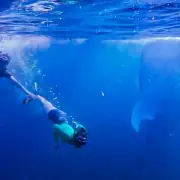
Whale sharks are the largest species of sharks in the world and the largest fish alive. They can grow up to 20 meters (60 feet) long, the size of a bus. Despite their size, whale sharks are filter feeders that only look for plankton and small fish. They pose no threat to humans, making a swim alongside them one of the most thrilling yet safe Raja Ampat wildlife encounters.
On our SeaTrek Kaimana to Sorong route, we often find these gentle giants near fisherman’s traditional fishing platforms called bagan, where small fish and plankton gather. This rich biodiverse area with a high concentration of food attracts whale sharks and fishermen alike, leading to a unique symbiotic relationship between local fishermen and whale sharks. This offers an opportunity for travelers to swim with these gentle giants at the surface.
Swimming with Whale sharks is one of my highlights from that trip, and one of my best memories at sea. It was my transformative experience because it was the first time I jumped into open water, and my first time swimming alongside the largest fish in the world.
- Tip: Encounters are best in Kaimana Bay between November and February. We follow strict ethical swimming guidelines to ensure these protected animals remain safe and undisturbed.
3. Stingless Jellyfish – Raja Ampat’s Magical, Starry Swim
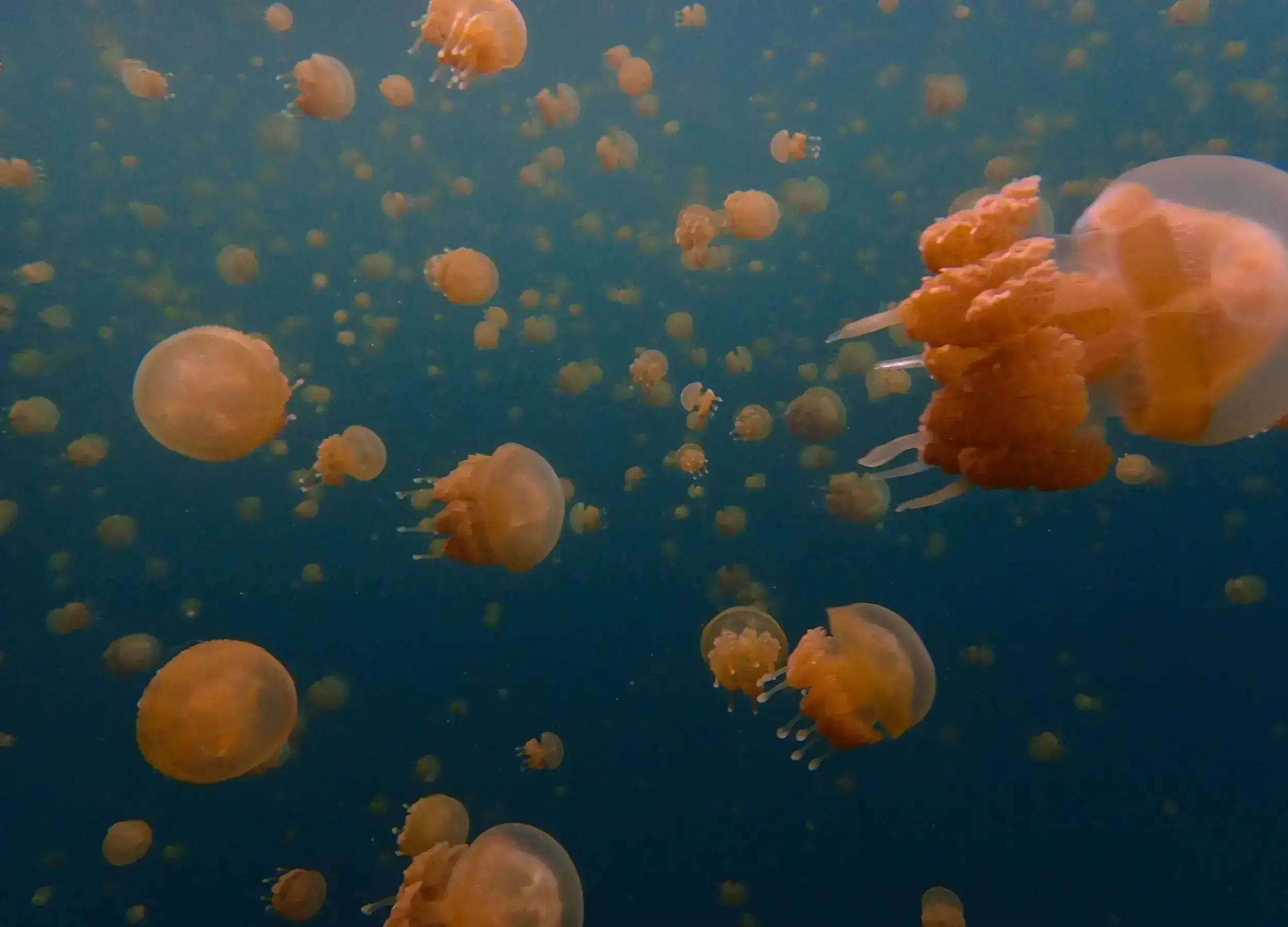
Stingless Jellyfish in Raja Ampat. (Anastasia Louhenapessy/SeaTrek Sailing Adventures)
Swimming with thousands of stingless jellyfish may sound unreal, but, in one of the remotest and hidden lakes in Raja Ampat, it’s a real-life possibility. There is a Lake in Raja Ampat called Lenmakana Jellyfish Lake, where you will find a population of these creatures that have lost their ability to sting.
The reason they become stingless is evolution. That happens because the lake is a completely enclosed ecosystem, so no natural predators threaten the jellyfish. Without need for a defense mechanism, these jellyfish never use their stinging ability, which makes their stinging capabilities diminish over thousands of years.
Now, imagine you are swimming with them. In my personal experience, swimming and seeing thousands of these jellyfish moving slowly around me makes me feel like I’m floating in the sky full of stars, with a very peaceful feeling.
- Tip: To help protect this sensitive environment, we make sure that our presence does not harm the ecosystem. When swimming with these stingless jellyfish, we swim slowly, use only reef-safe sunscreen, and do not wear swimming fins.
4. Coconut Crab – Raja Ampat’s Giant, Gentle Climber
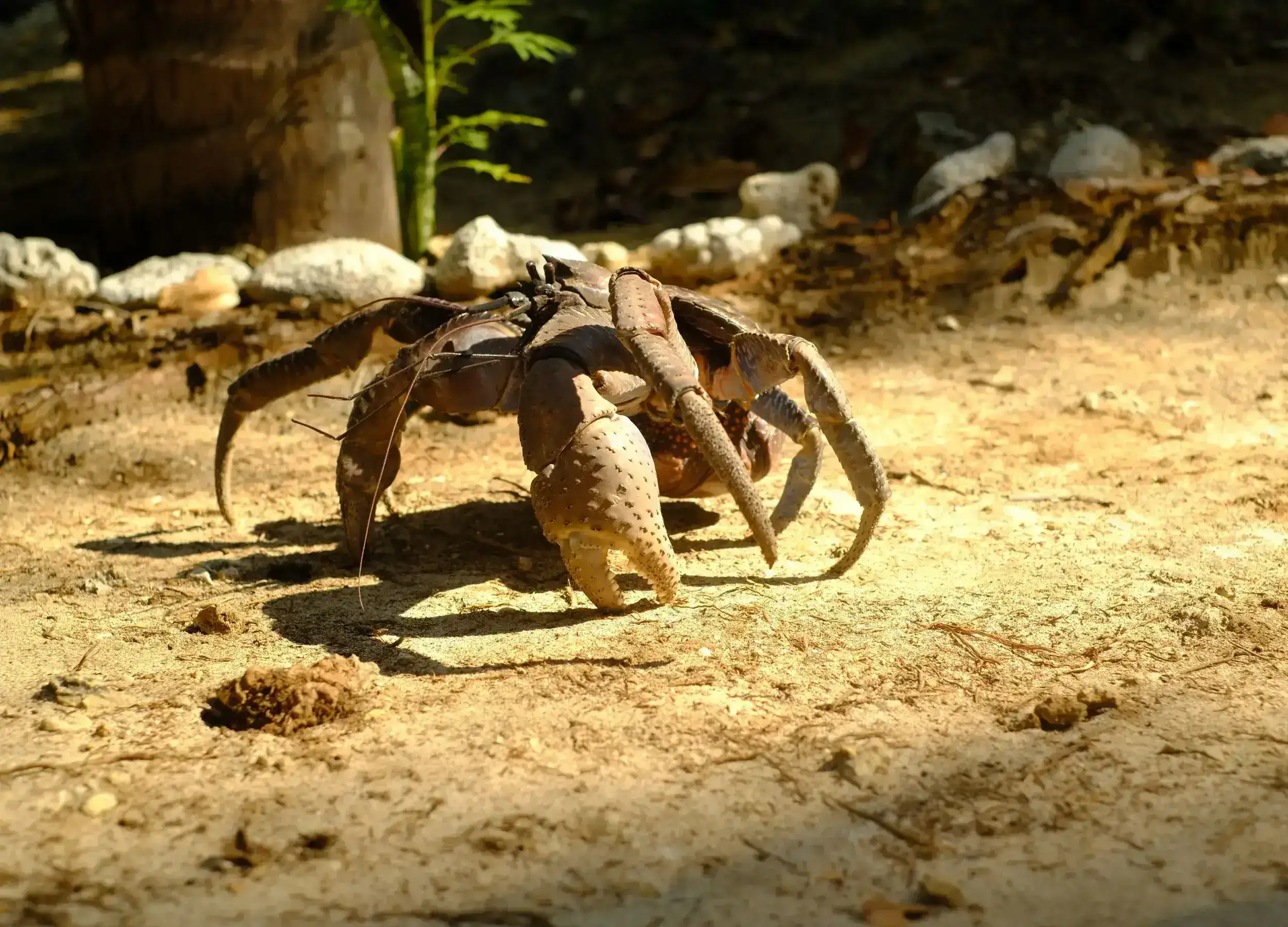
Giant Coconut Crab in Raja Ampat. (Dion Luas/SeaTrek Sailing Adventures)
The Coconut crab is the largest terrestrial arthropod and the largest land crab in the world, known for its impressive size. Its leg span exceeds 1 meter, and it weighs up to 4 kg. Besides its size, the coconut crab is also a powerful creature. Its claws and grip can get up to 1,500 newtons of force, which is very strong to crack open a coconut.
Despite its size and strength, this magnificent beast is docile. That’s also why it was a long time ago that humans could easily catch them. A community of conservation reports that people are hunting and selling these crabs, up to IDR 500.000 each for the large size, to restaurants and tourists visiting Raja Ampat. Fortunately, today, the local community in Raja Ampat has teamed up to protect the species. Their conservation efforts focused on education and preventing capture.
On our Ternate to Sorong cruise, we always visit a nearby small island where a local man has set up a coconut crab ‘sanctuary’. This island serves as home, and you can get up close with these rare species.
- Tip: This giant Raja Ampat wildlife always avoids human contact, so always prioritize ethical encounters and make sure your visits are always guided by local experts.
5. Zebra Shark – Raja Ampat’s Endangered Reef Ambassador
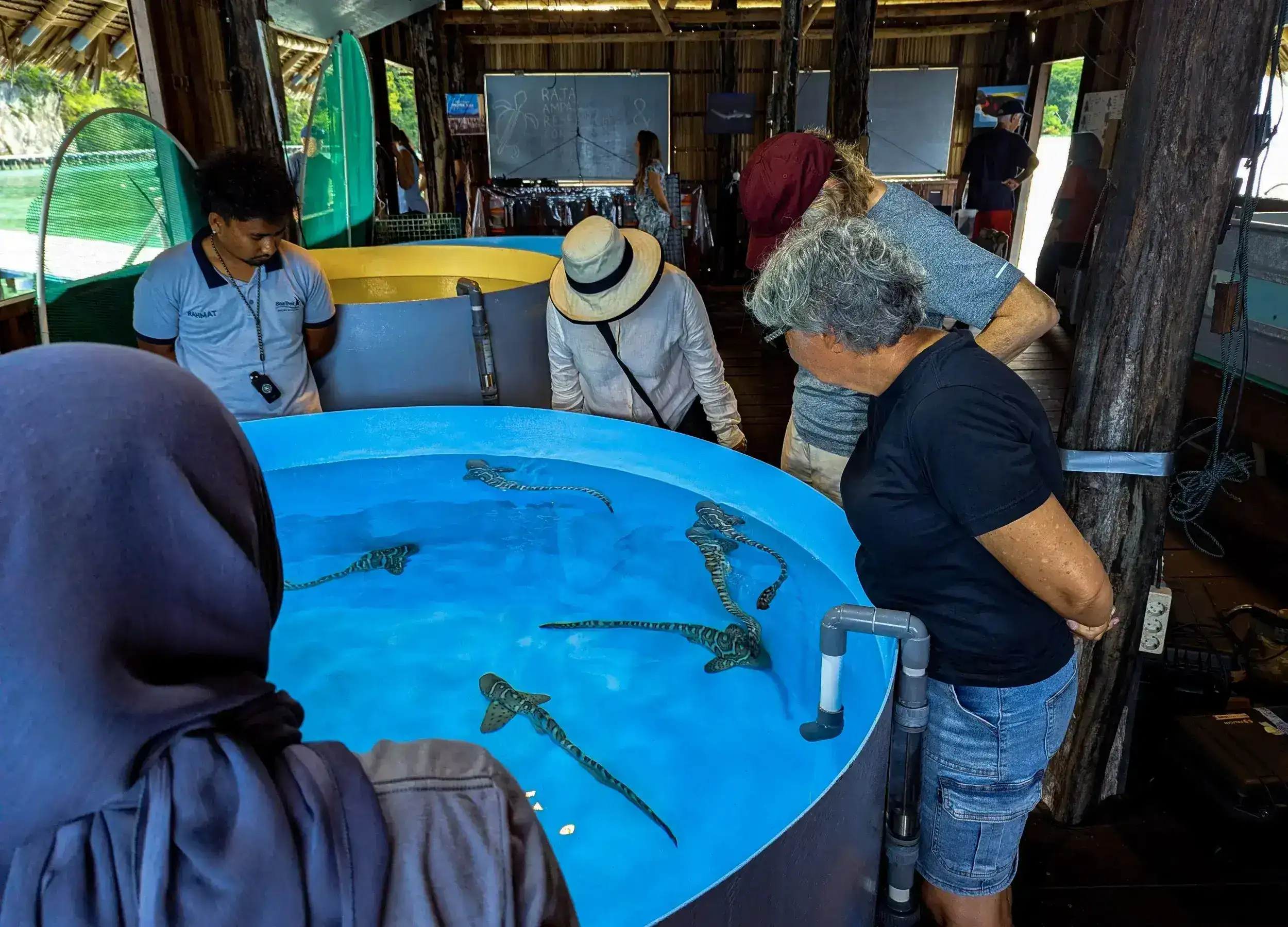
SeaTrek guest visiting Zebra Shark Hatchery in Raja Ampat. (Val Kenmir/SeaTrek Sailing Adventures)
Zebra Sharks used to be found anywhere in the Raja Ampat waters. Sadly, illegal hunting led them to be classified as an endangered species. Researchers counted only three after conducting research between 2001 and 2021, and 15,000 hours of searching. Witnessing them in Raja Ampat might be a rare but special encounter.
Thankfully, conservationists from various countries are running a project to restore the zebra shark population in Raja Ampat. The project goal is to release 500 zebra sharks in Raja Ampat waters by 2032. As of December 2024, they have released 14 Zebra sharks into the wild.
As travelers, our role at SeaTrek is to support this project by visiting the restoration site on Kri Island. Not just to show our guests the importance of conservation, but also as our commitment to sail for good.
- Tip: If you are hoping to spot Zebra Shark when snorkeling, try to look around shallow coral reefs, around seagrass beds, or sandy flats. Also, you can visit the nearby hatchery to learn more about the restoration project with the local expert.
6. Reef Manta Rays – Raja Ampat’s Graceful Ocean Giants

Reef manta rays in Raja Ampat. (Nita CJ/SeaTrek Sailing Adventures)
The Reef Manta Ray, or Mobula Alfredi, calls the Raja Ampat waters their home. The population is high in the area, and researchers discovered that this species of Manta always stays close or just migrating around to its home waters. This makes a sighting while snorkeling around all the island groups in Raja Ampat could easily happen.
Even though it’s possible to swim with manta rays in Raja Ampat because they are widely distributed in tropical and subtropical waters, we need to keep a responsible distance and not harm the population in any way. Reef manta rays are listed as a vulnerable species due to targeted fishing that trades for their gill plates.
We had one unforgettable experience with a reef manta in Raja Ampat. It was during a snorkeling session when an individual reef manta glided across. Realizing the beautiful sighting, our Tour Leader, Dani, with his camera, took a shot and sent it to Manta Trust and listed it as specimen #750. Our Tour leader later named the manta as Ombak Putih, the same name as one of our ships.
- Tip: When swimming with Manta Rays, always stay at least 3 meters away to avoid disturbing them. Our tour leaders will show you how to swim with these gentle giants in a way that ensures both the safety of the mantas and the best viewing experience for you.
7. Coral Reefs – Raja Ampat’s Underwater Kaleidoscope
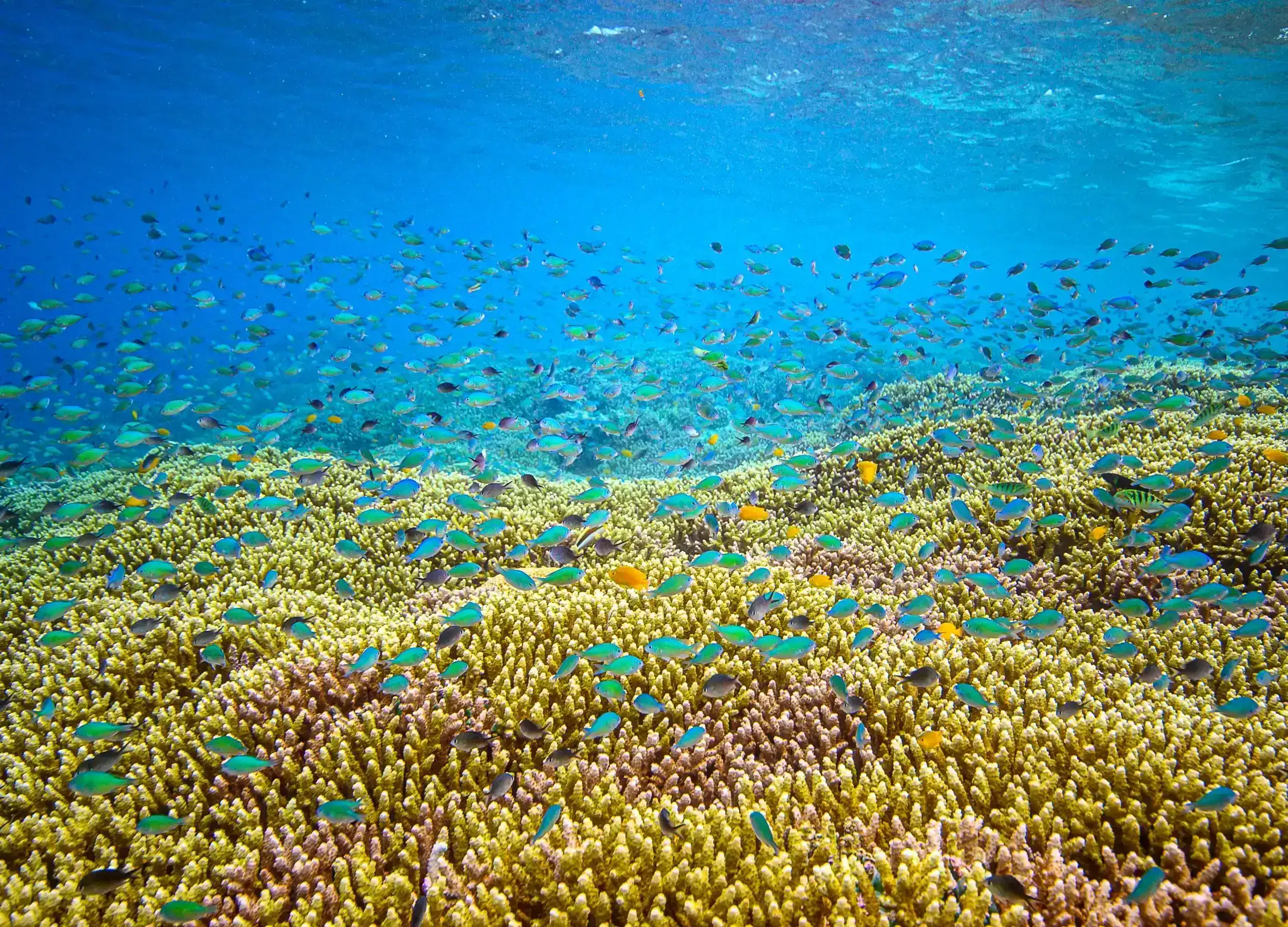
Fish and Corals life in Raja Ampat. (Vincent Chalias/SeaTrek Sailing Adventures)
Exploring Raja Ampat wildlife without witnessing its vibrant coral reefs isn’t a complete expedition. As the center of the world’s Coral Triangle, Raja Ampat has around 600 species of hard coral. The coral here plays a vital role in supporting underwater life as a habitat and providing food for many creatures.
As nature lovers, corals are one of our reasons that always keeps us wanting to come back here. The underwater ecosystem make our experience feel more extraordinary, and of course, snorkeling in Raja Ampat is one of the highlights of the trip.
I remember, in Yenbuba, one of the islands we visited on our Raja Ampat cruise. We snorkeled with lots of colorful corals and iconic sea creatures. And the best part was swimming with lots of schools of fish around. I haven’t found any diverse and breathtaking coral life as beautiful as in Raja Ampat yet.
- Tip: To make the most of your snorkeling experience, be sure to follow your guide’s advice on safe snorkeling practices. So you can enjoy the underwater beauty responsibly.
Plan Your Ethical Raja Ampat Wildlife Cruise
When exploring Raja Ampat, it is always possible to encounter these amazing animals. As travelers, we know that it’s essential to always practice ethical travel and wildlife encounters. This means, when observing animals, we always make sure our guests keep a safe distance, never touching or feeding the wildlife, or never harm the population. At SeaTrek, our voyages go beyond sightseeing. We travel with purpose, connecting you with ecosystems, communities, and stories that leave you transformed.
Ready to witness Raja Ampat wildlife in person? Join our Raja Ampat cruises this season and let’s discover wildlife in an ethical and immersive way together.
 (SeaTrek Sailing Adventures)
 (Agustina Siringoringo/SeaTrek Sailing Advnetures)
 (Hizkia Hukom/SeaTrek Sailing Adventures)
 (Abby Hyde/SeaTrek Sailing Adventures)
 (Agustina Siringoringo/SeaTrek Sailing Adventures)
 (Dion Luas/SeaTrek Sailing Adventures)
 (Anastasia Louhenapessy/SeaTrek Sailing Adventures)
 (Michael Willette/SeaTrek Sailing Adventures)
 (David Metcalf/SeaTrek Sailing Adventures)
 (David Metcalf/SeaTrek Sailing Adventures)