The Fabulous Flying Foxes (Fun Facts and How to See Them)
 (Jason Lye/SeaTrek Sailing Adventures)
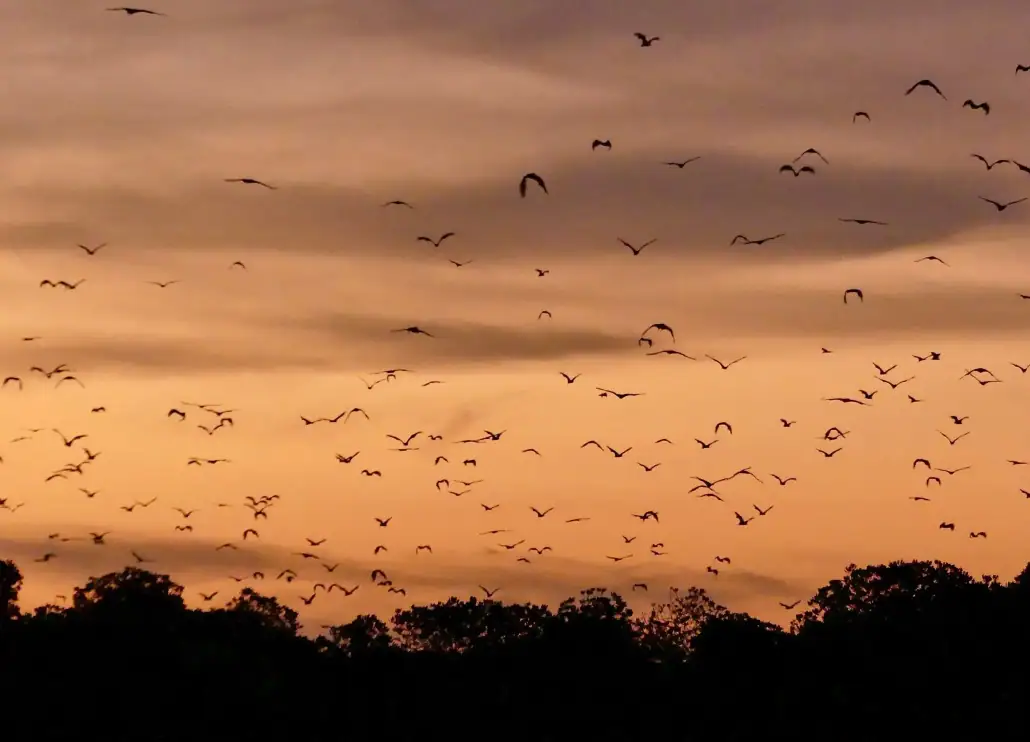
Sitting on the back deck of the Ombak Putih at Satonda Island at dusk off the north coast off Sumbawa. Cocktails in hand, we witnessed an arcane sunset mission as tens of thousands of flying foxes emerged in a steady throng from the forest. Reminiscent of a fleet of enemy aircraft intent on avoiding radar detection.
Unlike their smaller cave-dwelling cousins, these large fruit bats hang out in camps high above the rainforest floor, keeping cool by fanning themselves with their huge wings, which can measure up to 1.7 m from tip to tip. They feed on a diet of fruit and nectar from night-opening flowers, playing an essential ecological role by pollinating the plants and dispersing their seeds.
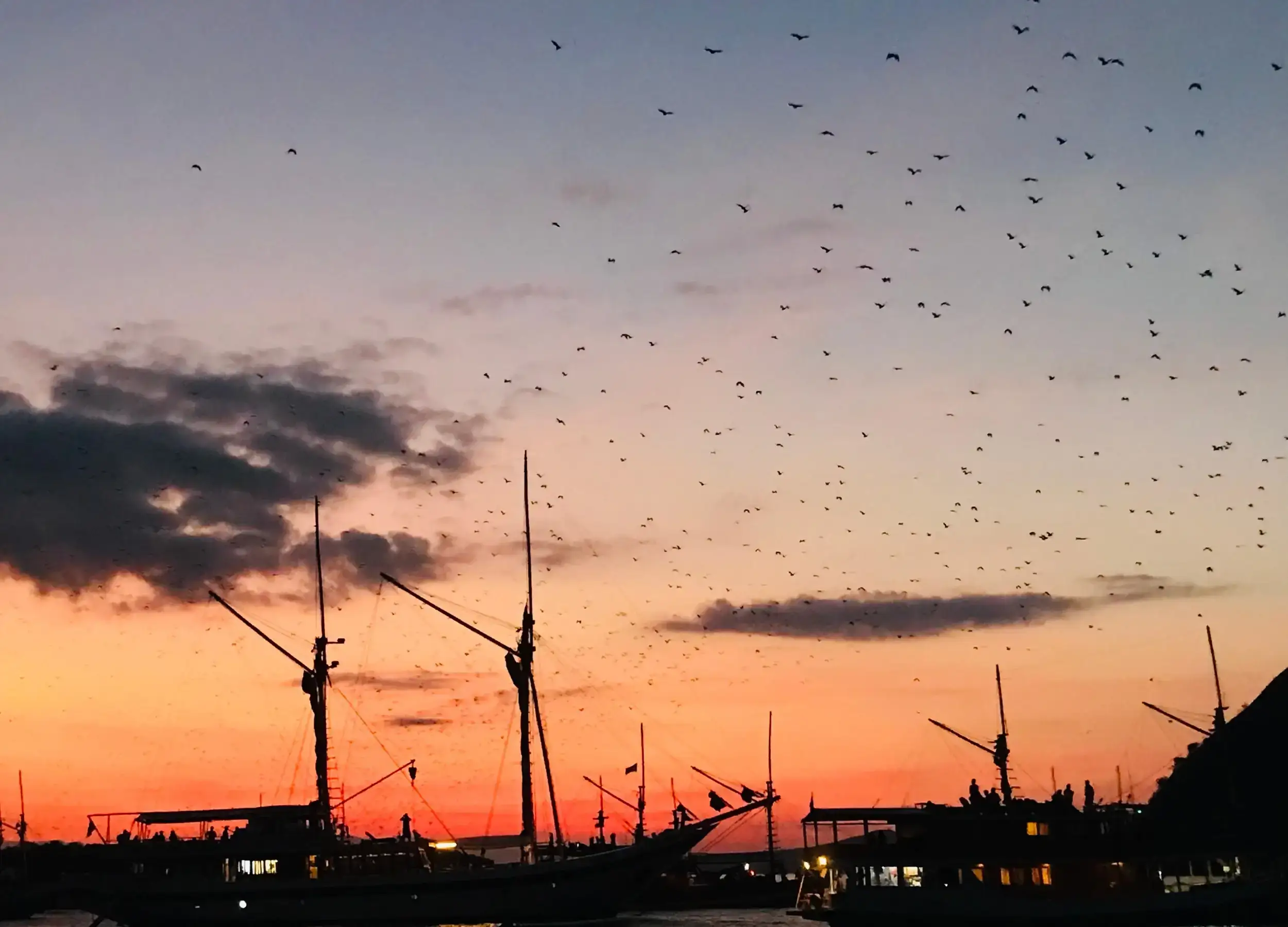
Watching flying foxes in Kalong Island. (Bayu Saputra/SeaTrek Sailing Adventures)
As darkness grows near, the fox bats become increasingly restless, leaving the roost in enormous numbers, and navigating not by echolocation but by sight and smell, to fly to a feeding site on the mainland that may be as far as 40 kilometres away. This marvel can also be witnessed at Kalong Island near Rinca, and likewise the bats can be seen returning to forest in the same spectacular fashion at dawn.
Watching the Flying Foxes Emerge at Dusk
The sky rapidly changes to glowing golden hues and the sun sets on yet another incredible day at sea. You sit back on the top deck with your drink in hand and imagine that it just can’t get any better than this. Sure enough, it can, and it does. Gazing towards the horizon you see fluttering activity, and soon enough that blazing sky is filled with graceful creatures taking wings. You can’t believe your eyes, it’s a sky full of giant fruit bats!
How Big is a Flying Fox and What do They Eat?
Indonesia has some of the most diverse and interesting bat fauna in the world, including 62 species of fruit bats, or flying foxes. The main difference between regular bats and fruit bats is their size. These flying fruitarians are enormous, weighing up to 1 kg with wingspans that reach up to 1.6 metres. Superstitious travellers can rest easy, as these creatures are vegetarians and are happy to feast on nectar and fruit. So, forget those old Dracula movies and enjoy the show!
How Can a Flying Fox Actually Fly and How Far?
Flying foxes and bats are the only mammals that can fly, their wings made up of extra-long arms and fingers covered with stretched skin. Unlike their smaller counterparts, fruit bats don’t need to use echolocation to navigate in the dark. Their huge eyes are highly adapted for night vision, and they can see 20 times better than any human. Flying Foxes are intelligent and have a complex social system, spending their days in permanent treetop communal camps. Each night at dusk they take wing in search of food, flying at around 40kph and up to 50km each night, returning to their roost before dawn, happy and well fed.
Why are Flying Foxes Important?
Flying foxes are extremely important to maintaining biodiversity in Indonesia forests through pollination and seed dispersal. Without bats forests would become genetically weak and less diverse in species numbers without the help of bats.
How Can I See the Flying Foxes for Myself?
If you would like to witness this exciting phenomenon of nature, read about SeaTrek Sailing Adventures’ Komodo and Beyond collection cruises held between April and September every year.
 Hizkia Hukom/SeaTrek Sailing Adventures
 (Agustina Siringoringo/SeaTrek Sailing Adventures)
 (SeaTrek Sailing Adventures)
 (Dion Luas/SeaTrek Sailing Adventures)
 (Nita CJ/SeaTrek Sailing Adventures)
 (SeaTrek Sailing Adventures)
 (David Metcalf/SeaTrek Sailing Adventures)
 (David Metcalf/SeaTrek Sailing Adventures)
 (Nita CJ/SeaTrek Sailing Adventures)
 (Dion Luas/SeaTrek Sailing Adventures)