Raja Ampat Cultures: Matbat of Misool & Marandan Weser of Batanta
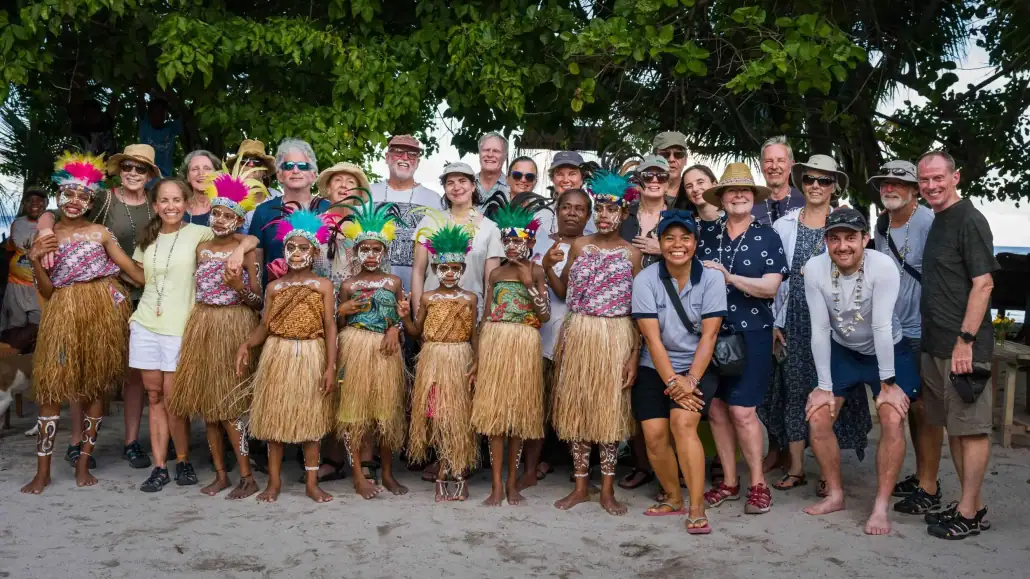 (Peter McCarthy/SeaTrek Sailing Adventures)
By Gavin Gallagher
When most travelers think of Raja Ampat, their minds turn instantly to its coral reefs, kaleidoscopic fish, and legendary marine diversity. But these islands are not only a paradise for nature lovers; they are also home to vibrant cultures and ancient traditions that have thrived for centuries, often hidden from the outside world.
We believe that the true magic of Raja Ampat lies in this powerful combination: astonishing nature interwoven with living culture. Sailing through these remote waters brings you not just closer to rare wildlife but also to the people who call this extraordinary archipelago home. Among them are two remarkable communities—the Matbat of Misool and the Marandan Weser of Batanta.
The Cultural Heart of Raja Ampat
Raja Ampat is one of the most culturally diverse corners of Indonesia. Across its hundreds of islands, you’ll find Papuan tribes with distinct languages, customs, and oral histories. These traditions are not relics of the past; they are living expressions of identity that guide daily life, from the way people fish and farm to the songs they sing at community gatherings.
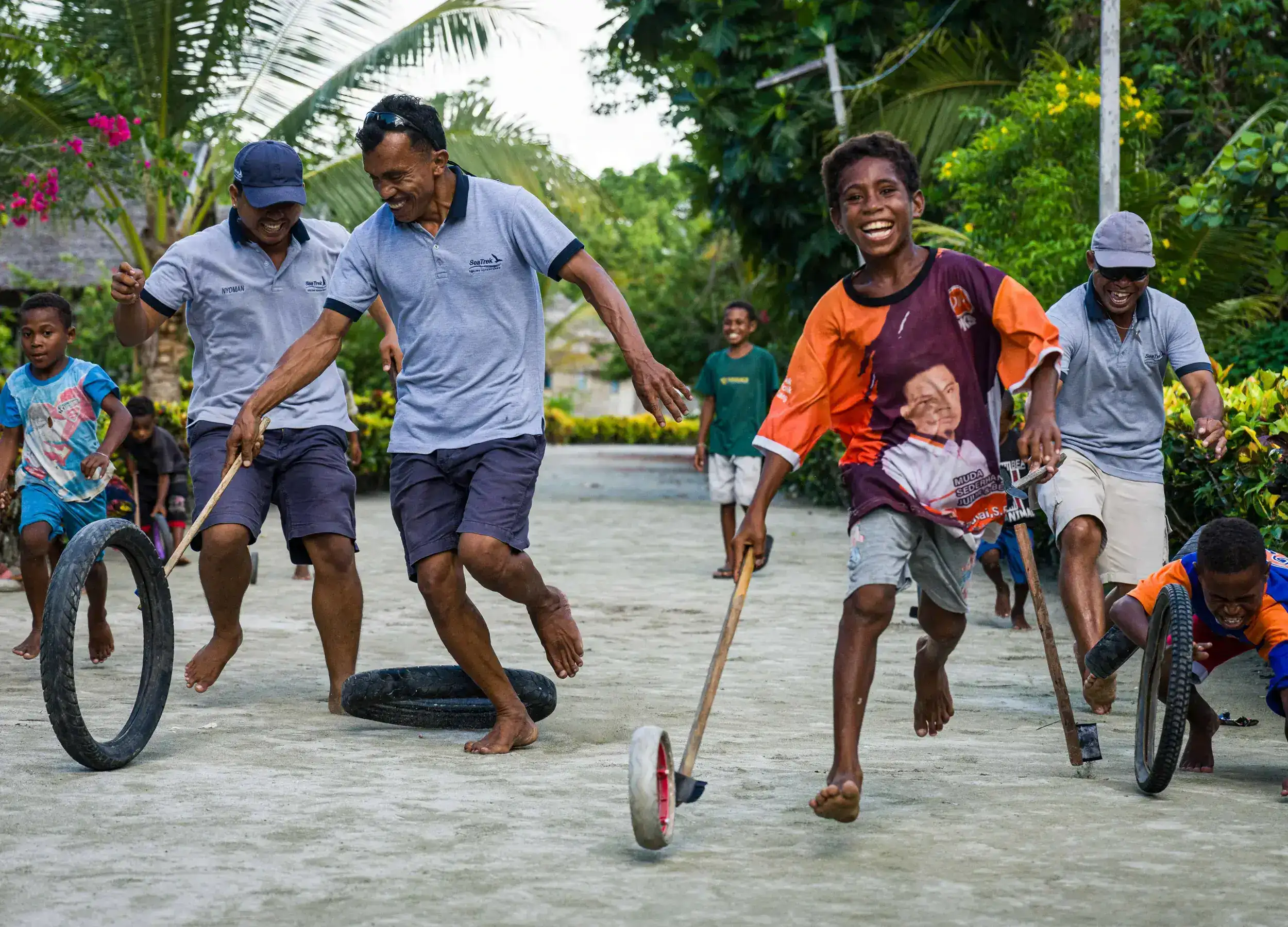
SeaTrek crew interaction with local kids of Marandan Weser. (Peter McCarthy/SeaTrek Sailing Adventures)
For travelers, meeting these communities is a great opportunity to glimpse a world shaped by ancestral wisdom and a deep respect for the balance between people and nature. If you’d like to dive deeper into the natural wonders of the region alongside its cultures, let’s get to know the Matbat People of Aduwei and The Marandan Weser People of Batanta closely.
1. The Matbat People of Aduwei, Misool
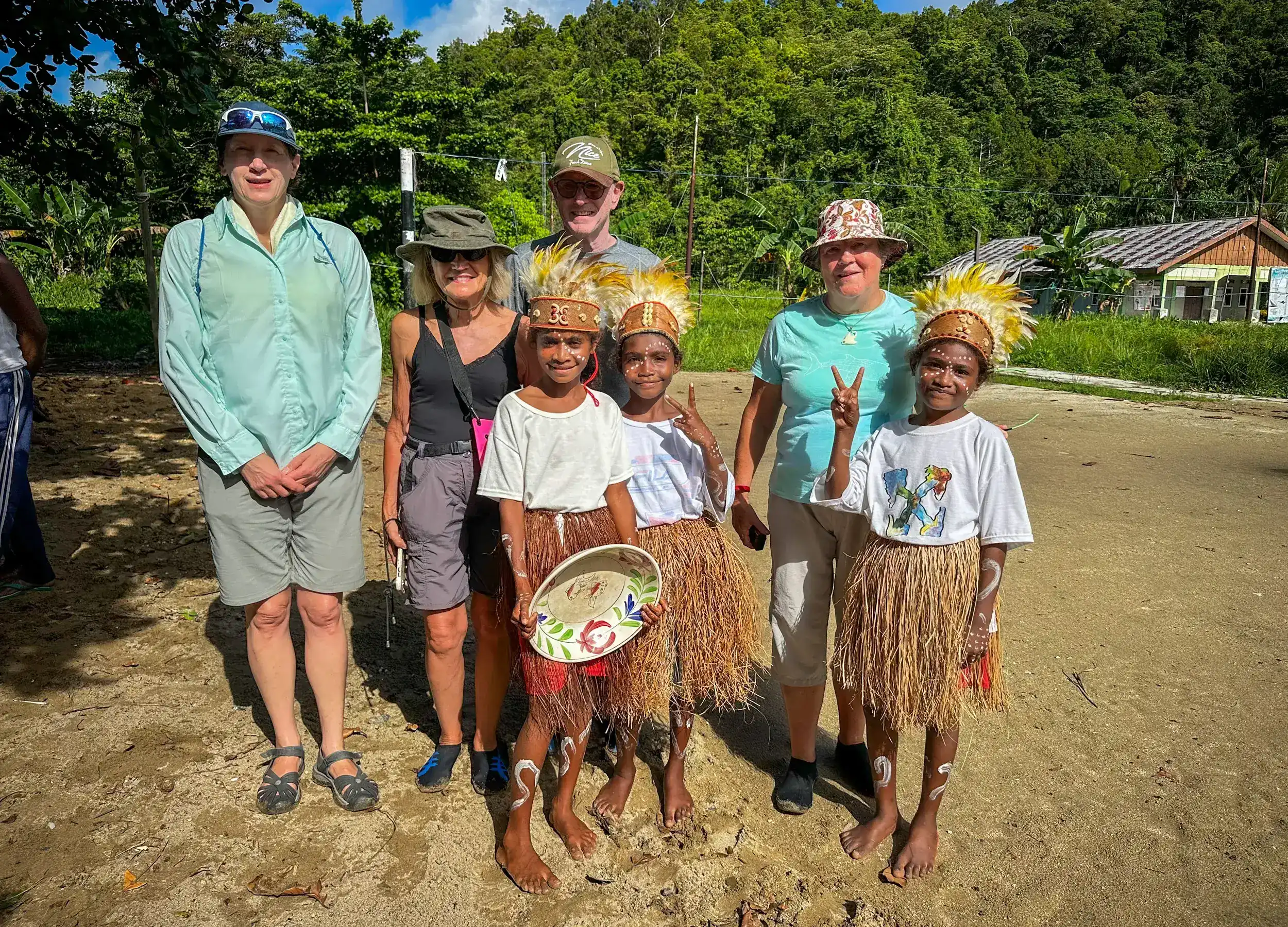
SeaTrek guests with kids of Aduwei in Misool. (Anastasia Louhenapessy/SeaTrek Sailing Adventures)
-
Ancient Roots and Endangered Language
The Matbat are among the original inhabitants of Misool, one of the four main islands of Raja Ampat. In the village of Aduwei, you can still hear the Matbat language, though it is spoken by fewer people each year. Linguists classify it as endangered, which makes every spoken word, song, or story an invaluable thread of cultural heritage.
-
Traditions and Spirituality
The Matbat worldview has long been shaped by their environment. Traditional animist beliefs once connected every reef, forest, and mountain with spiritual meaning. Today, most Matbat are Christian, but many ancestral traditions continue to influence community life. Storytelling, ritual dance, and songs remain vital ways of transmitting knowledge across generations.
-
Experiencing Matbat Culture with SeaTrek
For SeaTrek guests, visiting Aduwei is an unforgettable moment. You may be welcomed with dances and songs that blend Christian hymns with older rhythms passed down through centuries. These performances are not staged spectacles but heartfelt expressions of cultural pride. The community is also skilled in basket and mattress weaving from pandanus leaves, a traditional craft that showcases their ingenuity and connection to the natural environment.
2. The Marandan Weser People of Batanta
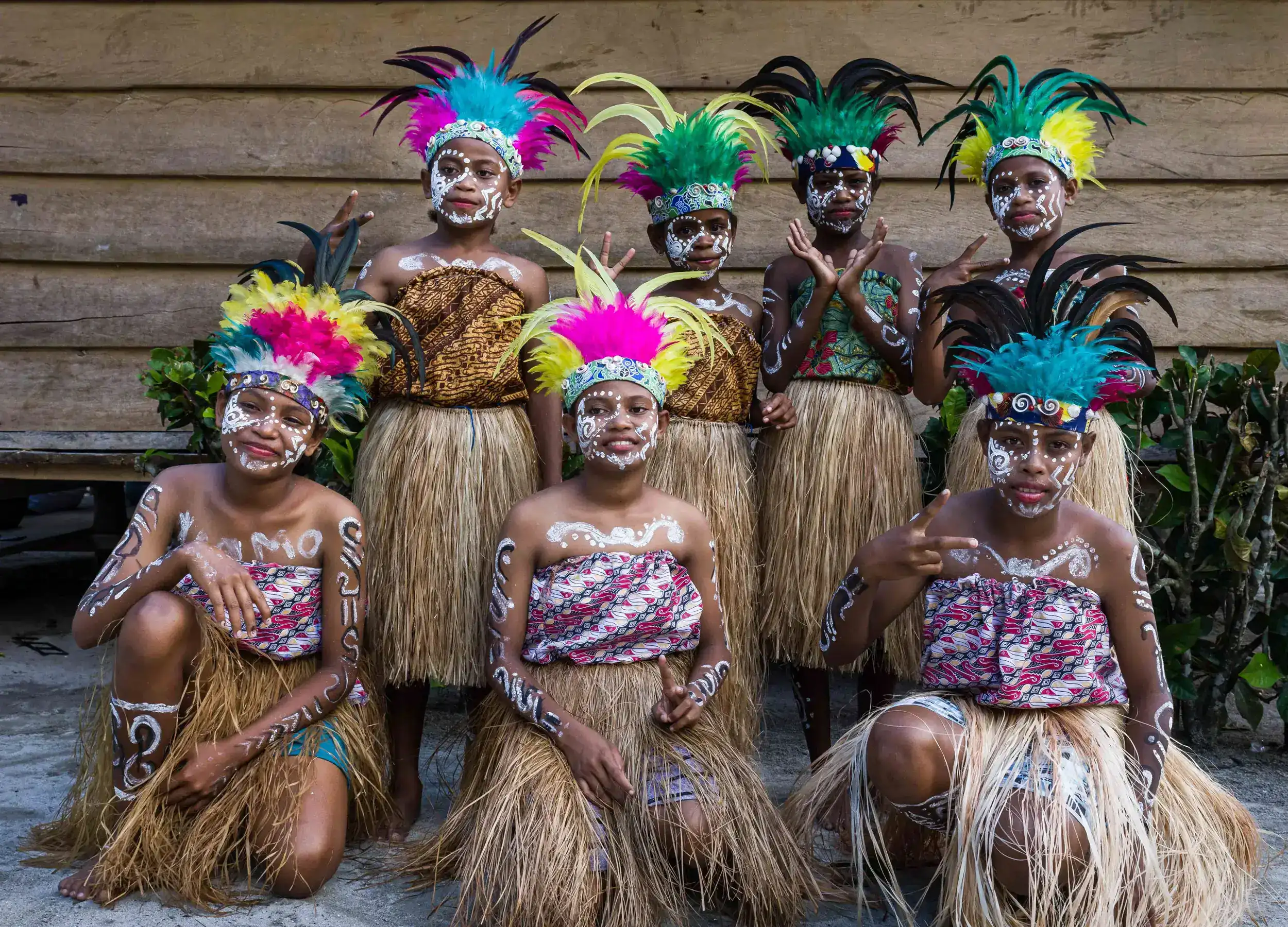
The Marandan Weser People of Batanta. (Peter McCarthy/SeaTrek Sailing Adventures)
-
Guardians of Batanta Island
Across Raja Ampat to the north, on Batanta Island, lives the Marandan Weser people. Like the Matbat, they are indigenous Papuans with a unique cultural identity. Their lives are closely tied to Batanta’s lush forests, waterfalls, and surrounding seas. This symbiotic relationship with nature is central to their sense of belonging and their role as guardians of the island.
-
Beliefs, Language, and Way of Life
The Marandan Weser, like many Papuan communities, live according to adat—customary law that governs not only social life but also the use of natural resources. These traditions ensure that forests are harvested sustainably and that fishing grounds are protected for future generations.
An extension village, Yensawai Marandanweser, is located in a sheltered bay, where the people continue to live in traditional forest-built houses, deliberately refusing concrete or modern buildings to preserve their ancestral way of life. They speak a mix of Besir and Biak languages, reflecting their belief that their ancestors originally came from the Biak area.
-
Cultural Encounters for Visitors
When SeaTrek guests visit Marandanweser Village, they are welcomed into a world where oral history is alive in ceremonial dances and drumming. These performances often tell stories of ancestors, nature, and the timeless relationship between people and place. Guests may also see demonstrations of forest knowledge—such as the use of plants for medicine or food—highlighting the community’s deep ecological wisdom.
Why Cultural Encounters Enrich a SeaTrek Voyage
For many travelers, it is the encounters with people that leave the deepest impressions. Visiting this community offers the privilege of stepping into villages where culture is not preserved behind glass but lived every day. Meeting the Matbat of Misool and the Marandan Weser of Batanta allows guests to experience Raja Ampat in its full richness—beyond the reefs, beyond the landscapes, into the heart of its living traditions.
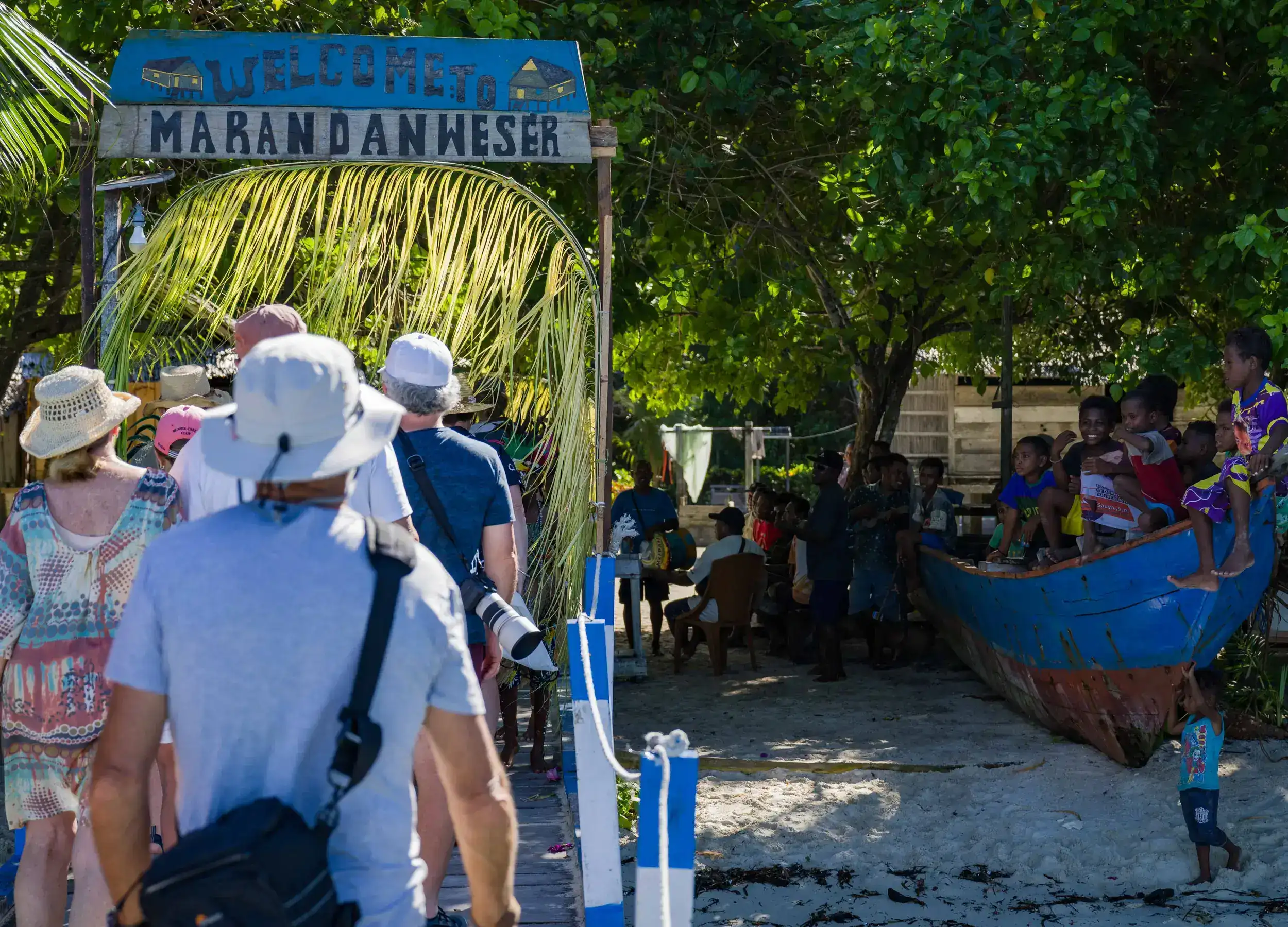
Visiting the Marandan Weser village in Batanta. (Peter McCarthy/SeaTrek Sailing Adventures)
At SeaTrek, we are committed to purposeful, respectful cultural travel. Our visits are arranged with sensitivity, ensuring that exchanges bring value to the communities and meaning to our guests. Every smile shared, every song heard, and every story told becomes part of a voyage that connects people across oceans and cultures.
Plan Your Next Trip in Raja Ampat, Where Culture and Nature Meet
Raja Ampat’s beauty is undeniable, but its greatest treasure may well be its people. The Matbat of Aduwei and the Marandan Weser of Batanta are living reminders that culture and nature are inseparable in this island world. Their traditions, songs, and wisdom enrich every journey, offering travelers not just a glimpse of the past but an invitation to connect with the present.
For those seeking more than scenery—seeking meaning, connection, and cultural immersion—a voyage through Raja Ampat offers exactly that: a journey into the beating heart of Wallace’s Paradise.
Frequently Asked Questions about Raja Ampat Cultures
1. What makes the Matbat people of Misool unique?
The Matbat of Aduwei Village are one of the original Papuan tribes of Misool. They speak the endangered Matbat language and are known for their pandanus-leaf weaving traditions, creating baskets and mattresses. Their cultural performances—songs, dances, and storytelling—reflect both Christian influences and deep ancestral roots.
2. How do the Marandan Weser people of Batanta preserve their traditions?
The Marandan Weser live in traditional forest-built houses and deliberately avoid using concrete to protect their ancestral way of life. They speak a mix of Besir and Biak languages, linking their heritage to Biak Island. Their cultural expressions include ceremonial dances and oral storytelling, which honor their ancestors and connection to nature.
3. Can travelers visit indigenous villages in Raja Ampat with SeaTrek?
Yes. SeaTrek Sailing Adventures offers respectful cultural encounters in villages such as Aduwei (Misool) and Marandanweser (Batanta). Visits are designed to benefit the communities while allowing guests to experience authentic traditions through song, dance, and storytelling. These encounters complement the natural beauty of Raja Ampat with its equally rich cultural heritage.
 (Agustina Siringoringo/SeaTrek Sailing Advnetures)
 (Dion Luas/SeaTrek Sailing Adventures)
 (Agustina Siringoringo/SeaTrek Sailing Adventures)
 (Antonin Borgeaud/SeaTrek Sailing Adventures)
 (Ashley Ward/SeaTrek Sailing Adventures)
 (Dion Luas/SeaTrek Sailing Adventures)
 Peter McCarthy/SeaTrek Sailing Adventures
 (Agustina Siringoringo/SeaTrek Sailing Adventures)
 (Hizkia Hukom/SeaTrek Sailing Adventures)