Historical Sites in Maluku to Discover More the Spice Island’s History
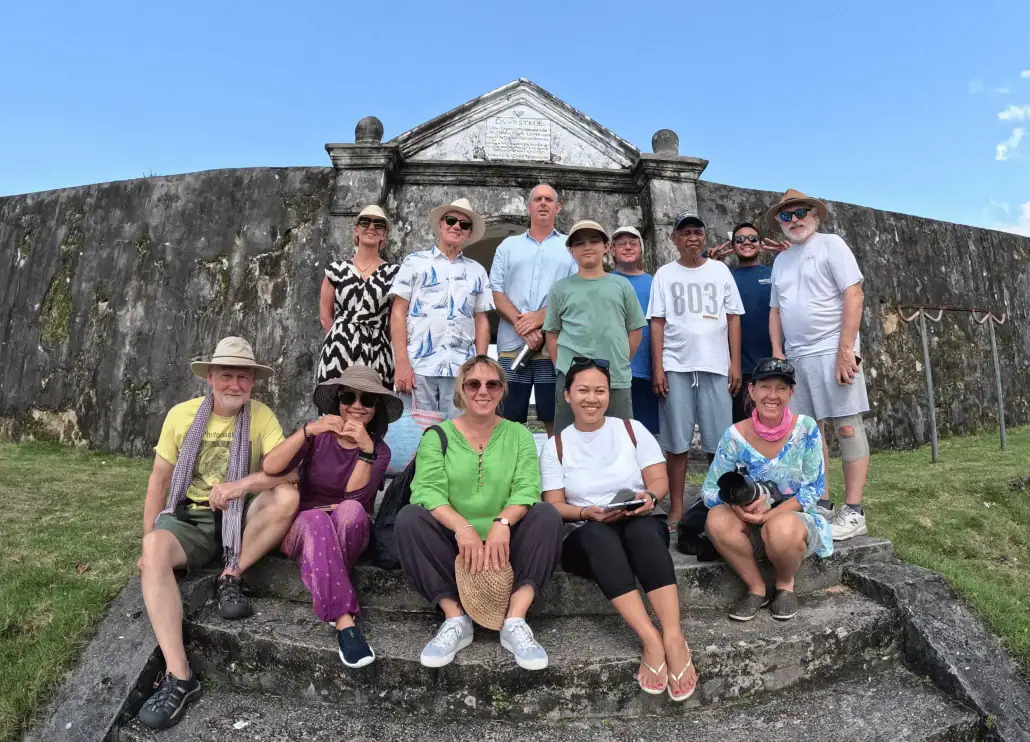 (Tinae Siringo-Ringo/SeaTrek Sailing Adventures)
By Abd. Wahab
Maluku, also known as the Spice Islands, has a long history of spice trade and wars. Located in the eastern part of Indonesia, the Spice Islands are a group of islands comprising Halmahera, Banda, Seram, Ambon, Ternate, and Tidore.
These islands were famous for being the source of the iconic spices: cloves, nutmeg, and mace. These spices attracted European powers in the 16th century, leading to fierce competition for control of the islands, and the rest is history.
Now, numerous historical sites in Maluku become evidence of the long history of the Spice Islands. This place offers many untold stories about Indonesia and more about the Spice Islands and beyond.
Historical Sites in Maluku Islands
If you want to learn more about the history of the Spice Islands, there are several historical sites in Maluku that you can visit. It includes historical forts in Maluku, religious sites, and the sultanate palace.
1. Fort Nassau
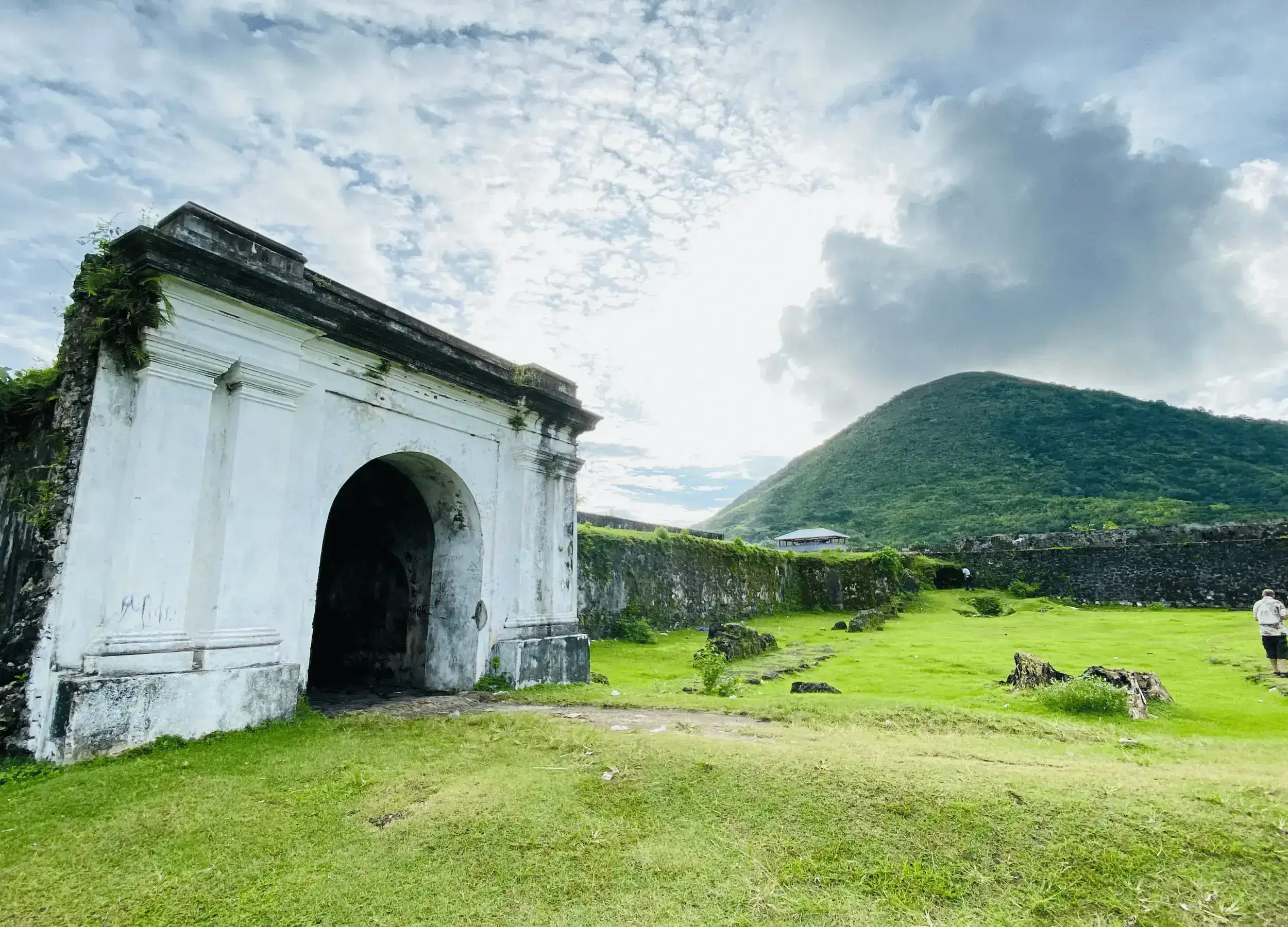
Fort Nassau. (Dion Luas/SeaTrek Sailing Adventures)
Fort Nassau is the first Dutch fortress constructed on Neira Island, part of the Banda Islands archipelago. Built atop the foundations of an abandoned Portuguese fort, The Dutch East India Company (VOC) undertook the construction under the command of Admiral Verhoeven, starting in 1607 and finishing in 1609.
The main reason for building Fort Nassau was to control the nutmeg trade, which was only available on the Banda Islands at the time. In addition to its defensive function, the fort also served as the Dutch administrative center on the island and as a storage place for spices.
In 1621, Fort Nassau became a silent witness to a dark chapter in the history of Banda, known as the Banda Massacre.
2. Fort Belgica
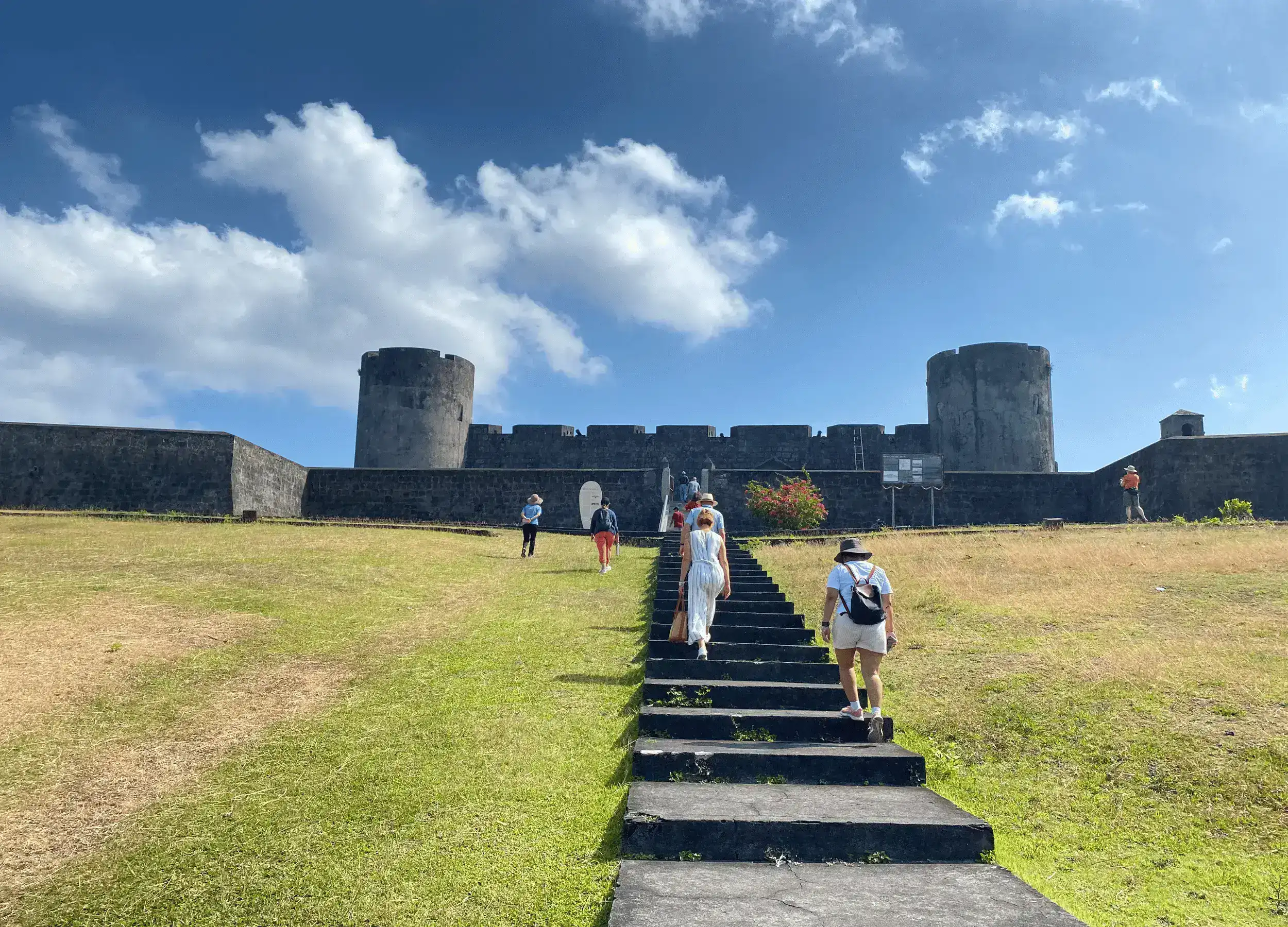
Fort Belgica. (Dion Luas/SeaTrek Sailing Adventures)
In 1611, just two years after the construction of Fort Nassau, the VOC built another fort called Fort Belgica. The primary purpose of this fort was to safeguard Fort Nassau, which was constantly under attack from arrows fired by Banda people from atop a hill in opposition to the VOC on the nutmeg trade monopoly.
Built on a hill, Fort Belgica made it easier for VOC soldiers to monitor and control the Banda people. The fort also helped them catch people and ships trying to smuggle spices. It made their control over the nutmeg trade even stronger.
The fort still stands today, and in 2015, UNESCO added Fort Belgica to the World Heritage Tentative List as part of the Historic and Marine Landscape of the Banda Islands.
3. Nutmeg Plantation & Fort Hollandia
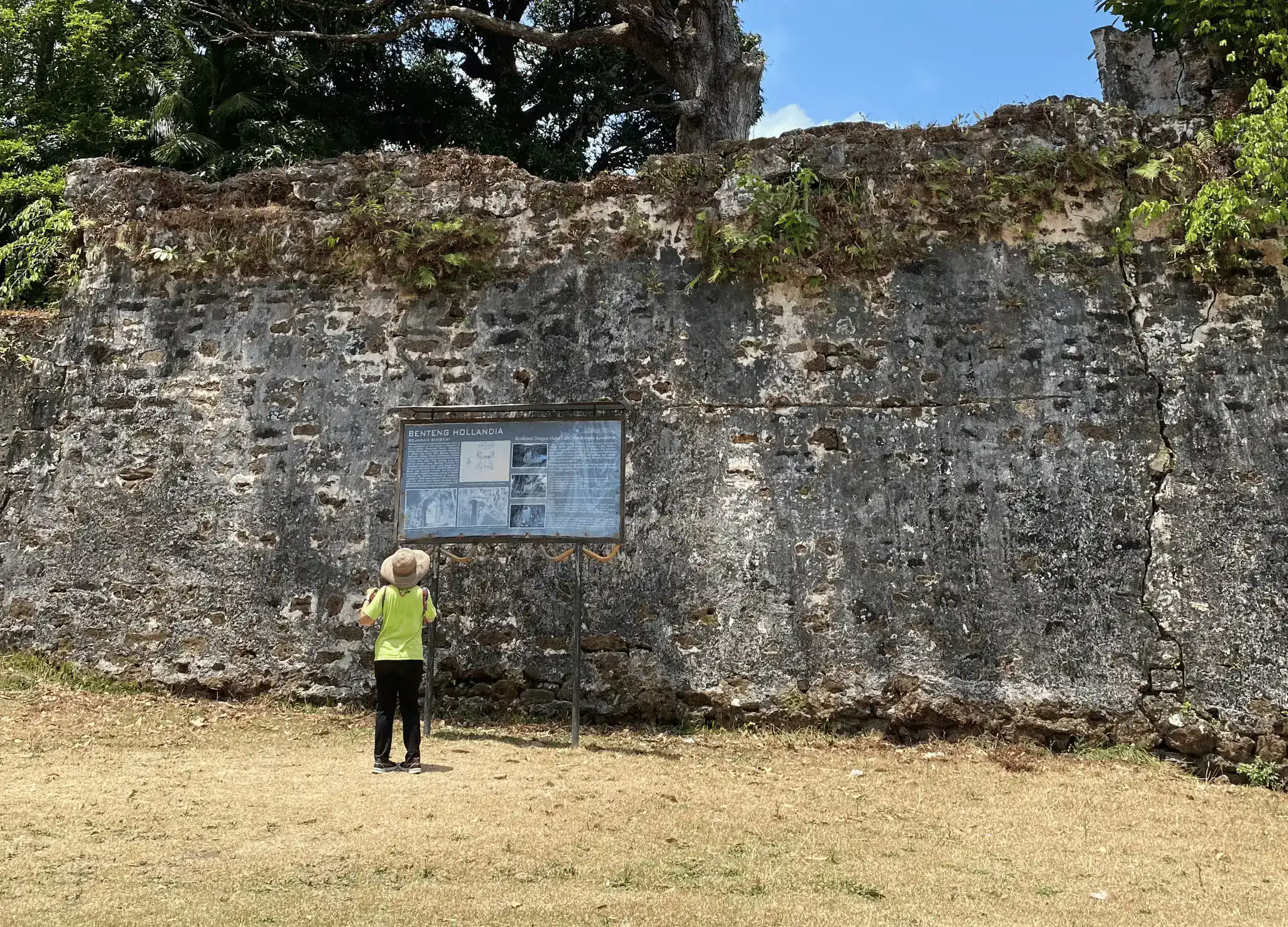
Fort Hollandia. (Dion Luas/SeaTrek Sailing Adventures)
Fort Hollandia, known as Fort Lonthoir, is one of the historical forts in Maluku. This fort was built in 1624 on Lonthoir Island in the Banda Islands by sailors, soldiers, and Javanese prisoners under the Governor-General of VOC, Jan Pietersz Coen.
The VOC built Fort Hollandia to control the nutmeg plantation and trade between Lonthoir and Banda Neira Island. The fort is built right across from the Mini Palace on Banda Neira for two reasons. First, to watch the nutmeg trade. Second, to protect the Mini Palace, the government building.
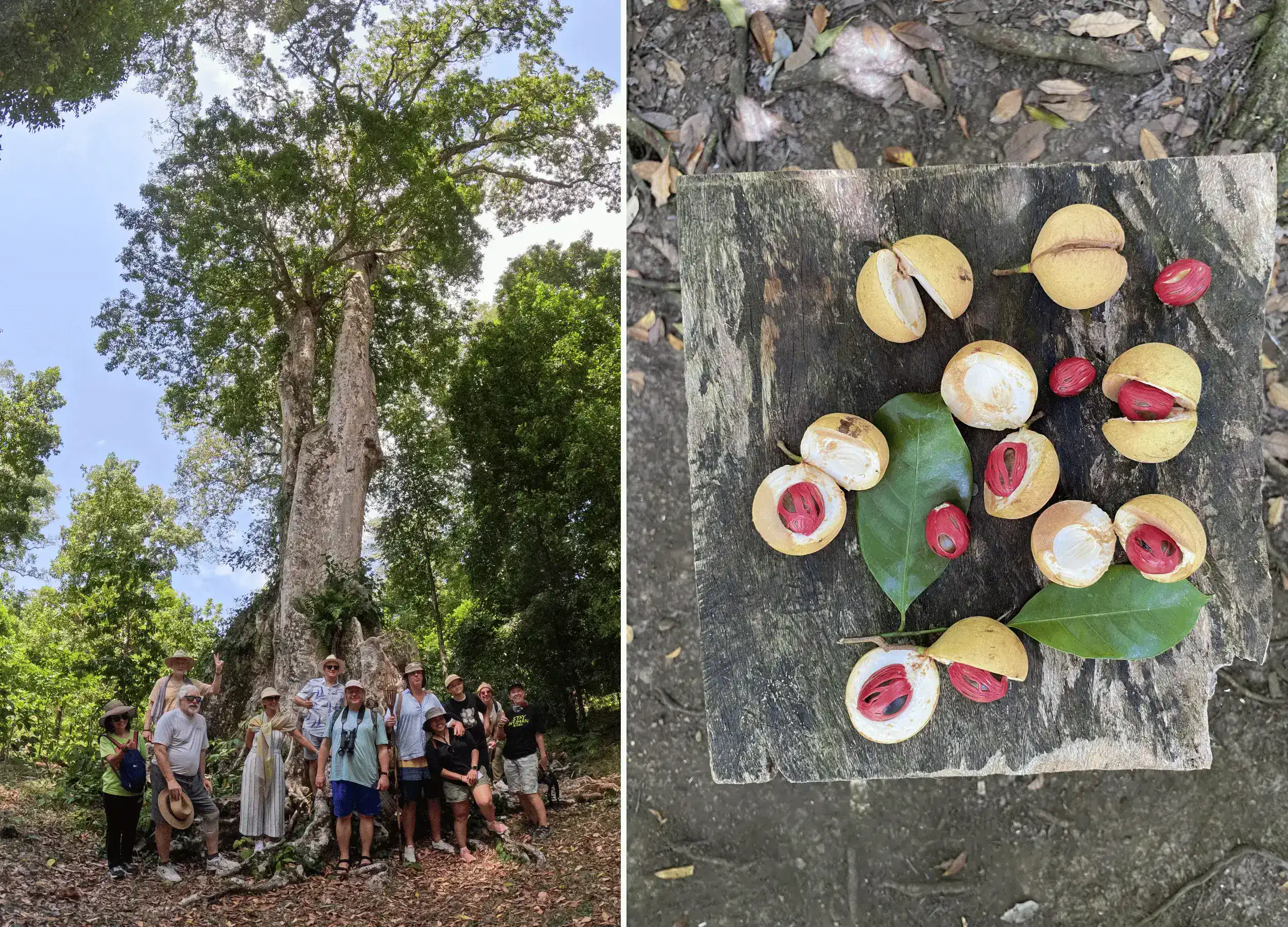
Nutmeg plantation near the Fort Hollandia. (Tinae Siringo-Ringo/SeaTrek Sailing Adventures)
Fort Hollandia is still standing but not in the best condition ever since a volcano erupted in 1743 and damaged the fort. A Dutch leader, Francois van Boeckholtz tried to fix it in 1976, but the damage was too bad to restore to its original state.
4. Fort Revengie
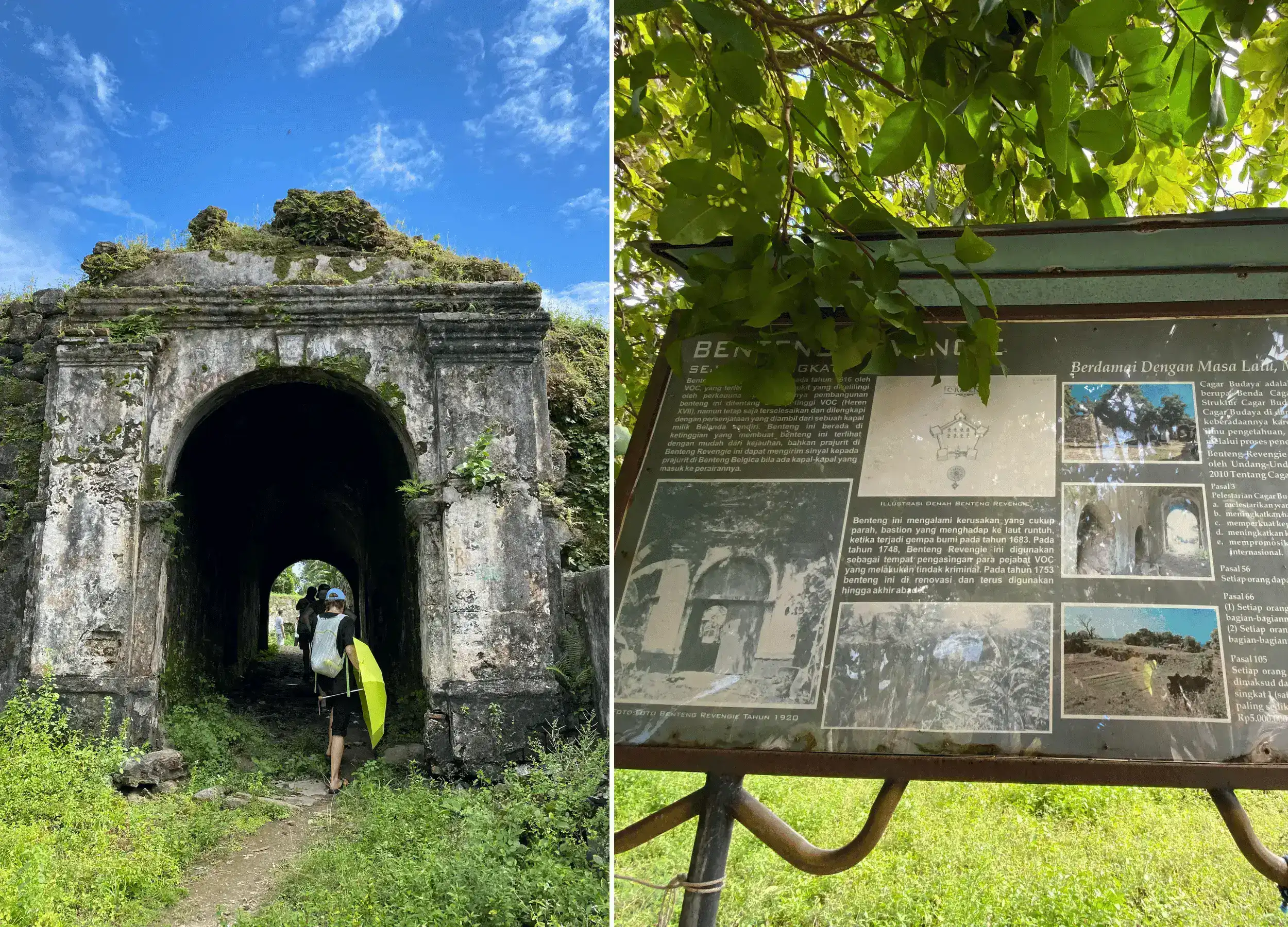
Fort Revengie. (Dion Luas/SeaTrek Sailing Adventures)
The name Fort Revengie, meaning ‘Revenge’ in English, reflects the violent beginnings of its construction. The story goes back to the VOC and their conflict with the inhabitants of Ai Island in the Banda Islands.
The VOC was unhappy because the inhabitants wouldn’t follow their rules for selling spices. In 1615, the VOC, led by Adriaan van der Dussen and Pieter van den Broecke, arrived on Ai Island. They invade the island without much trouble from the inhabitants. After a few days, the Ai inhabitants launched a counterattack and kicked the VOC off the island.
A year later, in 1616, Van der Dussen returned to Ai Island with even more soldiers. This time, they took over the island again and did something to punish the Ai inhabitants for fighting back. Then, they built a fort as a defensive base and named it Fort Revengie as a symbol of revenge.
5. Fort Oranje
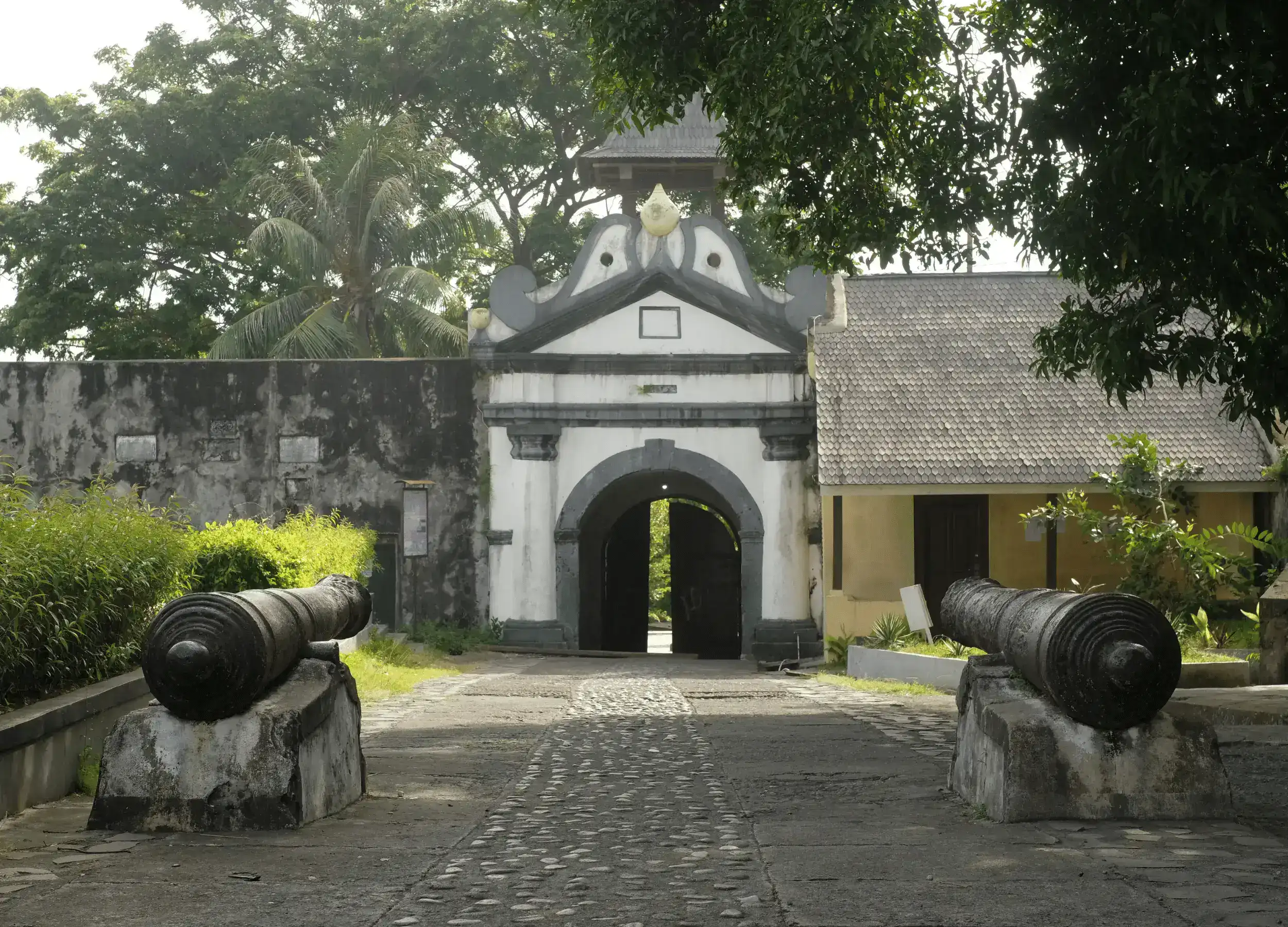
Fort Oranje. (Dion Luas/SeaTrek Sailing Adventures)
Before the Dutch arrived, the Portuguese had a fort in Ternate called Fort Malayo, named after the Malay people who lived there. Later, the Sultan of Ternate gave this fort to the VOC as a gift for helping them fight off the Spanish and Portuguese from Ternate.
In 1607, under the direction of Cornelis Matclief de Jonge, the Dutch constructed a new fort on the same spot where Fort Malayo once stood and named it Fort Oranje. This fort solidified the Dutch authority in controlling and monopolizing the spice trade, particularly in Ternate.
6. Fort Tolukko
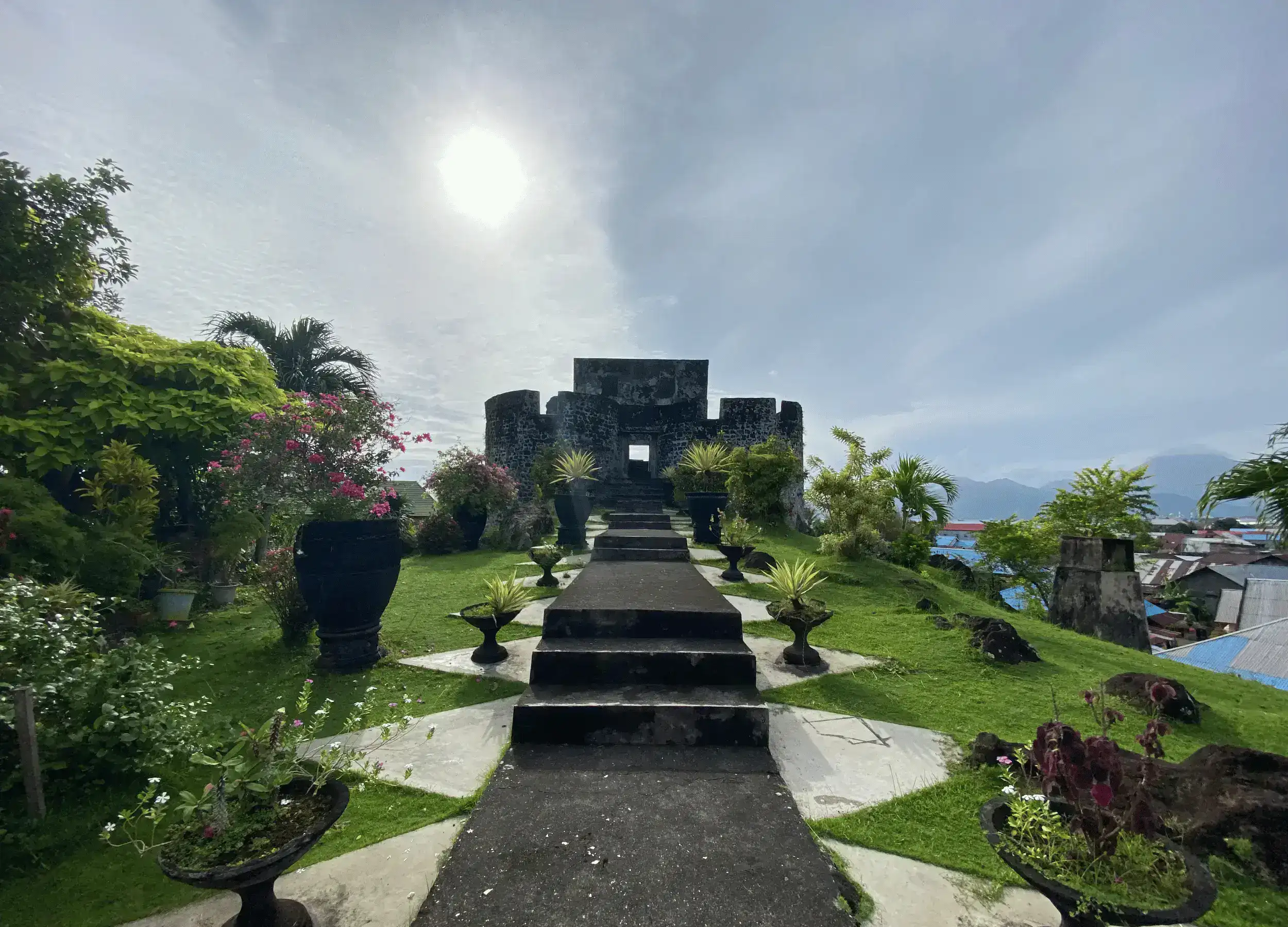
Fort Tolukko. (Nita CJ/SeaTrek Sailing Adventures)
During the 16th century, the Portuguese ruled the spice trade in Ternate. Under the command of Captain Francisco Serrao, they constructed a fort as a defensive base against threats and for storing their valuable Ternate’s native spices, which they actively traded. This fort was named Fort Santo Lucas.
But in 1577, the Portuguese reign came to an end. The people of Ternate, led by Sultan Baabullah, got tired of the Portuguese trying to control and monopolize the spice trade. They fought back, took over Fort Santo Lucas, and named it Fort Tolukko.
Then, in the 1600s, the Dutch arrived. They took Fort Tolukko from the Ternate people and used it as one of their forts in Ternate. They even changed the name to Fort Hollandia. Finally, in 1661, after the Dutch and the Sultan of Ternate, Sultan Mandar Syah, made a cooperation agreement, the Ternate people were allowed to move back into Fort Tolukko.
7. Fort Duurstede
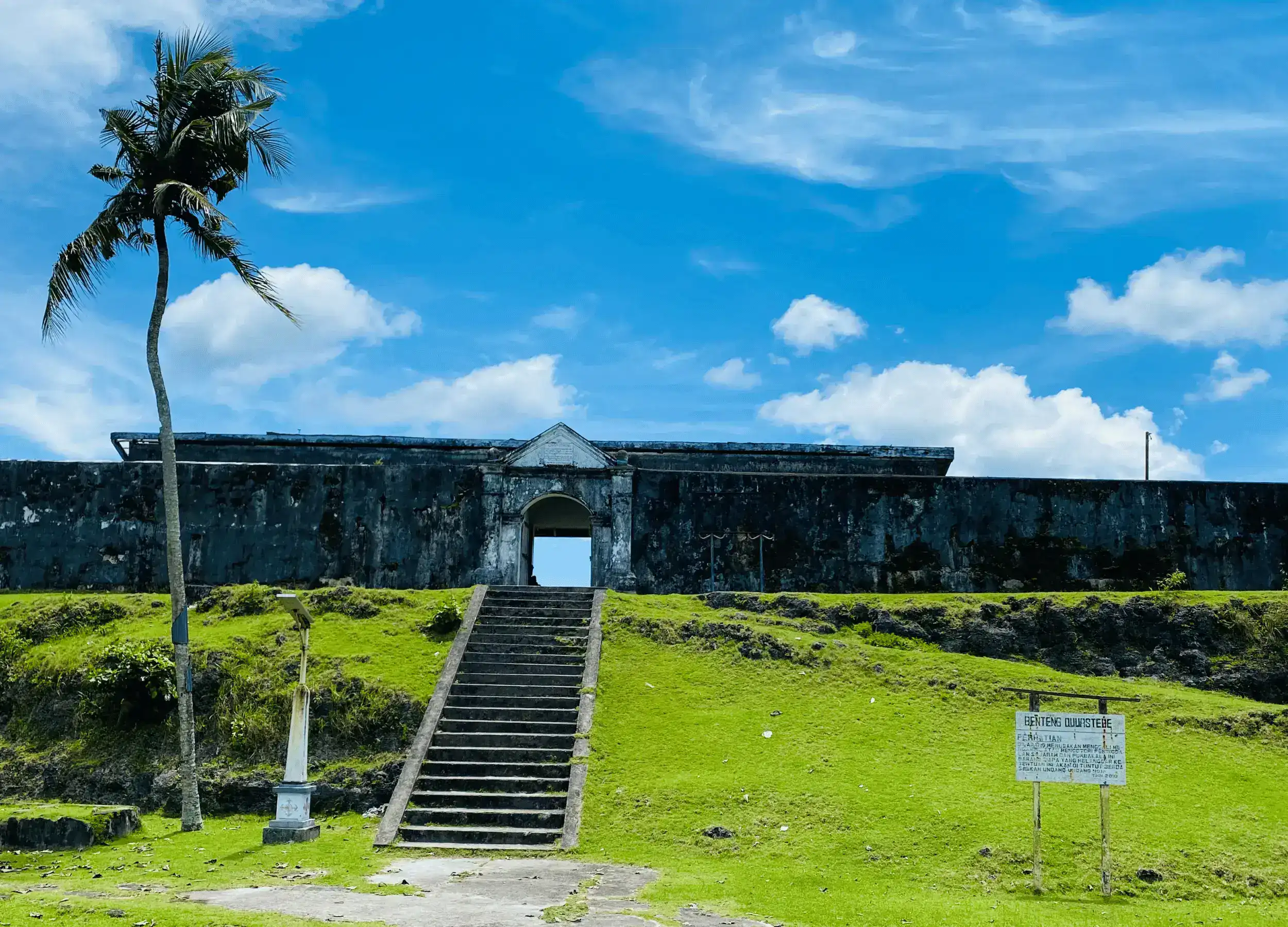
Fort Duurstede. (Dion Luas/SeaTrek Sailing Adventures)
Fort Duurstede, constructed in the 17th century on Saparua Island in the Maluku region, has changed hands several times, from the Portuguese to the Dutch to the British. It reflects the shifting power dynamics in the area. The fort’s presence is evidence of Europe’s ambition to dominate the spice trade, especially in Saparua, a well-known producer of cloves.
Fort Duurstede also stood as a silent witness to the resistance of the Saparua people against the VOC monopoly on the spice trade. Kapitan Pattimura led this fight, known in history as the Pattimura War.
8. Fort Amsterdam
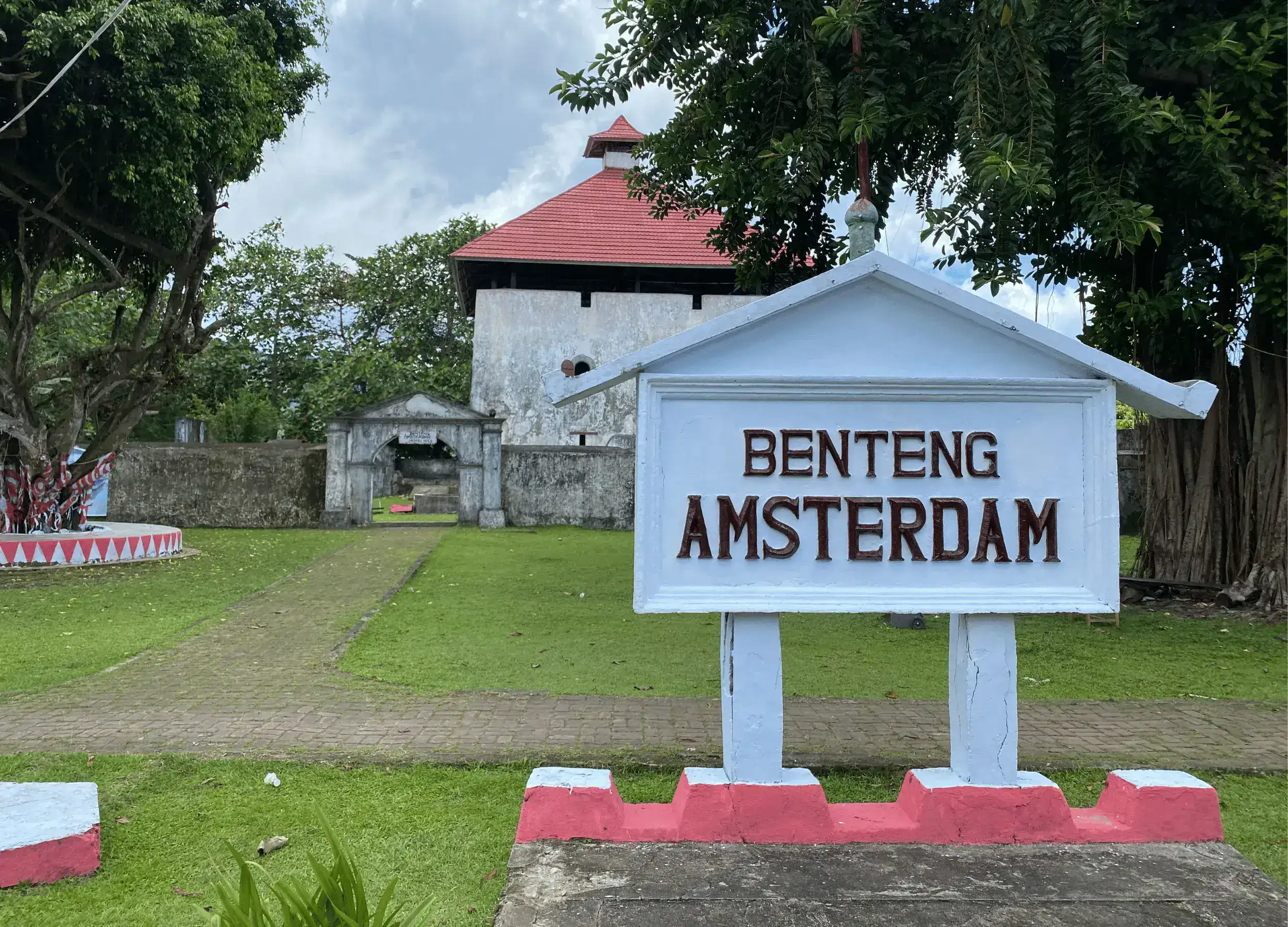
Fort Amsterdam. (Dion Luas/SeaTrek Sailing Adventures)
Fort Amsterdam has lots of stories. Before being known as Fort Amsterdam, this building was a lodge built by the Portuguese under the command of Fransisco Serrao in 1512. Located on a bay where trading ships came and went, the Portuguese made this place a center for spice trade and a defensive base.
Then, in 1605, the Dutch arrived and beat the Portuguese. The Dutch took over the building and turned it into a defensive fort known as Fort Amsterdam.
Another story about Fort Amsterdam is that it witnessed the journey of a German naturalist named Georg Everhard Rumphius. Between 1627 and 1702, Rumphius lived in this fort while he came to study and research the plants and animals of Ambon.
Even though earthquakes and tsunamis have hit Ambon and affected the buildings, Fort Amsterdam still stands today and has become one of the historical sites in Maluku.
9. Wapauwe Old Mosque
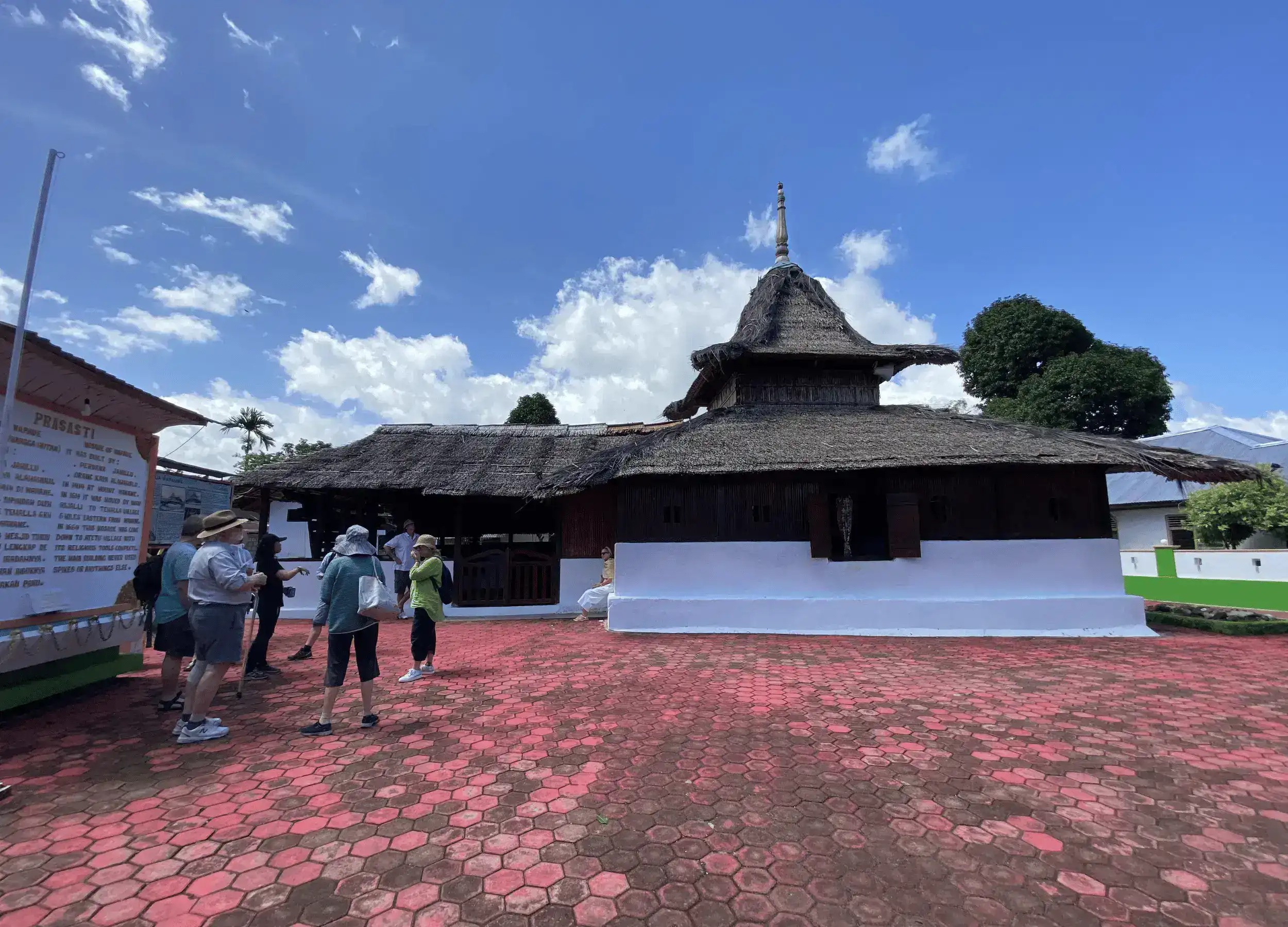
Wapauwe Old Mosque. (Tinae Siringo-Ringo/SeaTrek Sailing Adventures)
The Wapauwe is the oldest mosque in Maluku and one of the oldest in Indonesia. It was built in 1414 and is still standing and used for prayers today. The mosque has kept its original form, built with wood and tied with ijuk (palm fiber ropes) instead of nails.
A unique story about this mosque is about its relocation. The original place of the mosque was near Mount Wawane. But then the Dutch East India Company (VOC) came to Maluku and caused trouble. According to local folklore, the mosque moved by itself to its current location with the help of supernatural powers. Now, it’s close to Fort Amsterdam and the Imanuel Hila Church.
10. Imanuel Hila Old Church
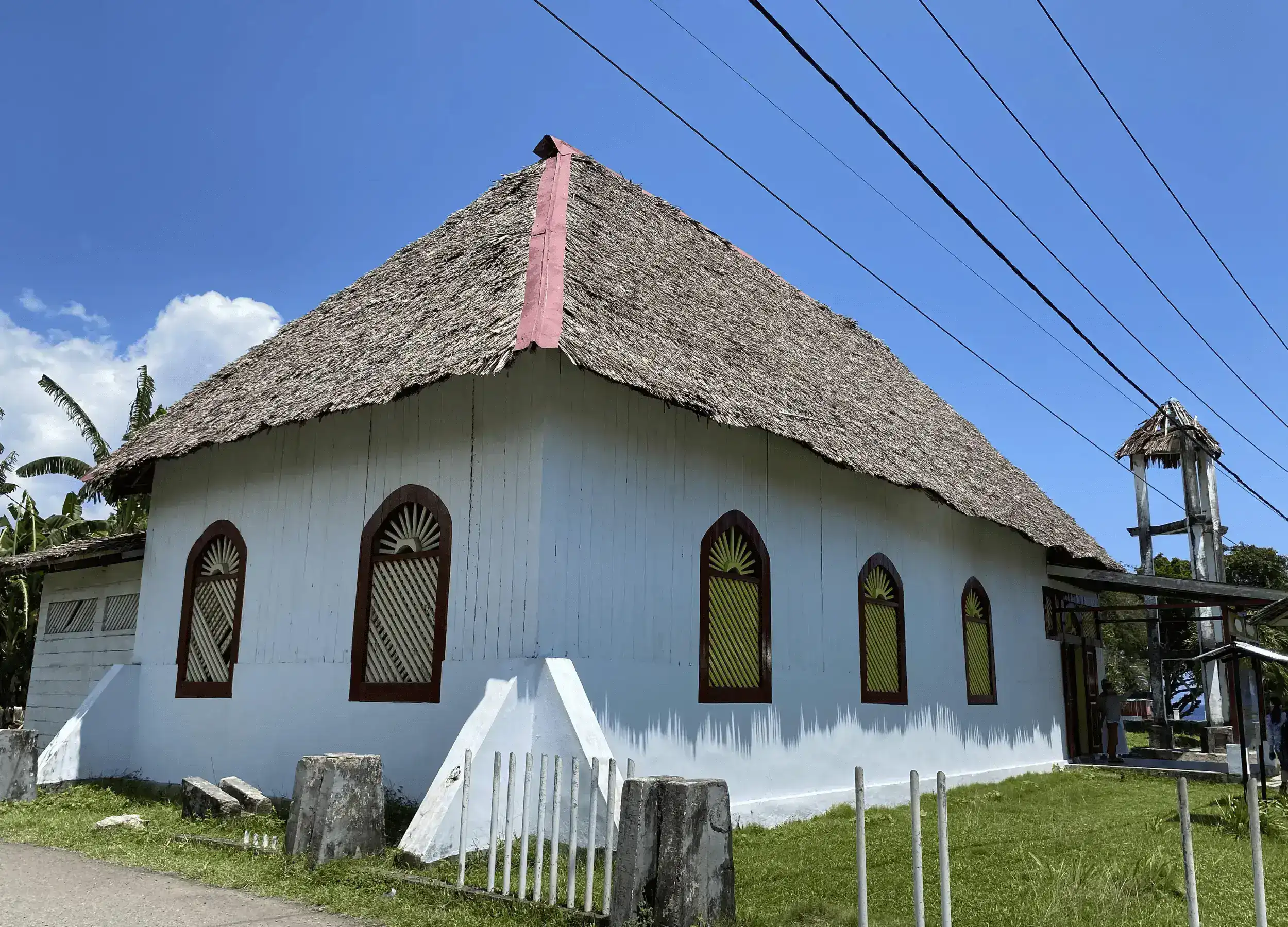
Imanuel Hila Old Church. (Tinae Siringo-Ringo/SeaTrek Sailing Adventures)
The Imaneul Hila Old Church is evidence of the Dutch occupation of Maluku and was part of the Christianity spread in Hila. This church was built in 1780 and completed in 1871, and the name “Imanuel” means “God is with us.”
In 1999, the civil war destroyed the church. However, people rebuilt it with the same form and structure as the original. Although it no longer serves as an active place of worship, people can still visit and use the Imanuel Hila Old Church for prayer. Nowadays, authorities have designated this church as one of the historical sites in Maluku.
11. Banda Neira Dutch Church
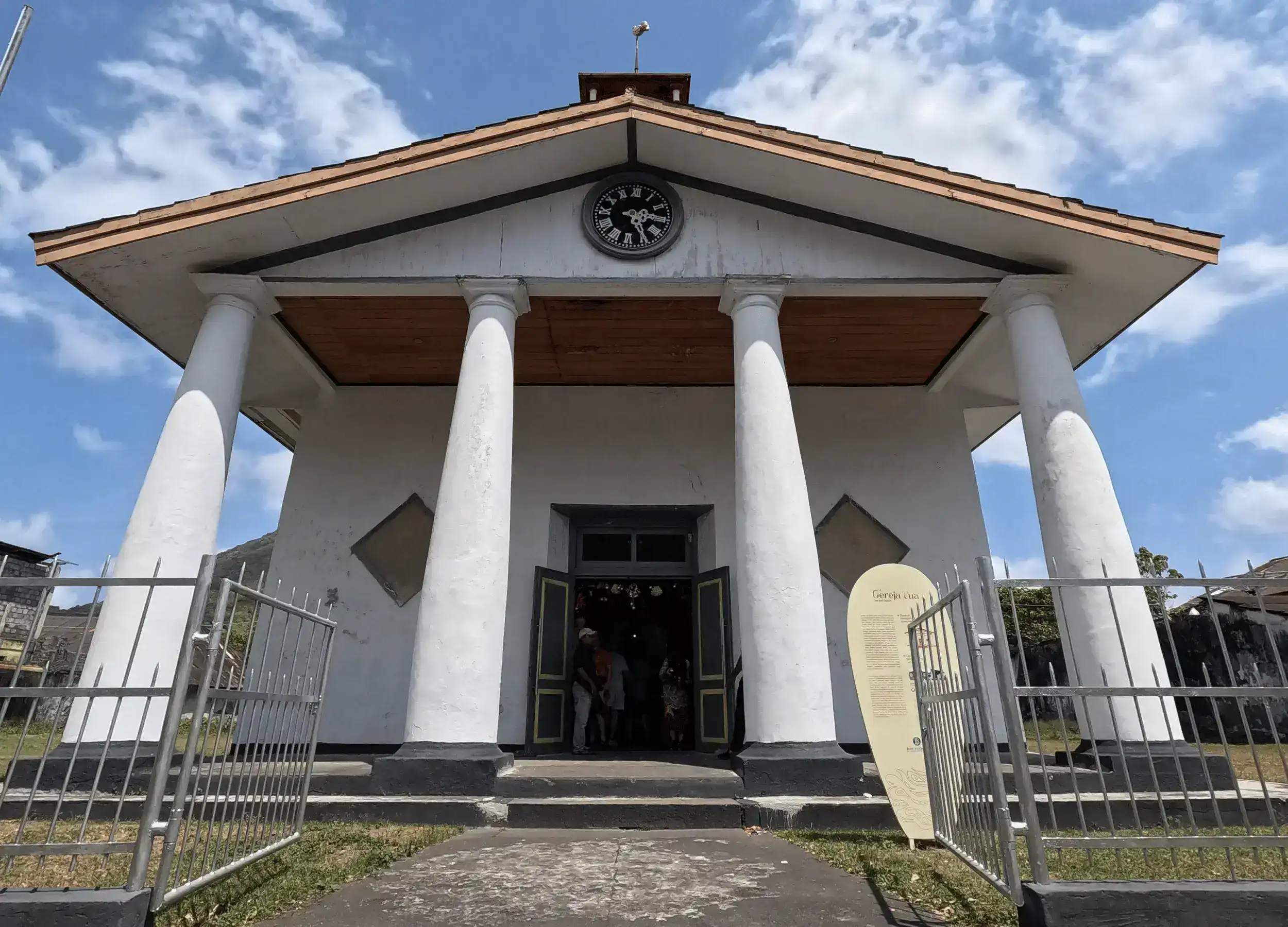
Dutch Church in Banda Neira. (Tinae Siringo-Ringo/SeaTrek Sailing Adventures)
The Banda Neira Dutch Church was built in 1600 for the Dutch residents of Banda during the spice trade and colonization. The church underwent reconstruction in 1852, following the architectural style of the Dutch East Indies, after being destroyed by an earthquake.
One of the most unique things about this church is the engraved tombstones on the floor. There are 34 stone engravings depicting important VOC figures along the entrance hallway. These people, who died and were buried on the island, played a role in Banda’s history as Governors, Perkeniers (nutmeg planters), and other VOC members.
12. Tidore Sultan’s Palace
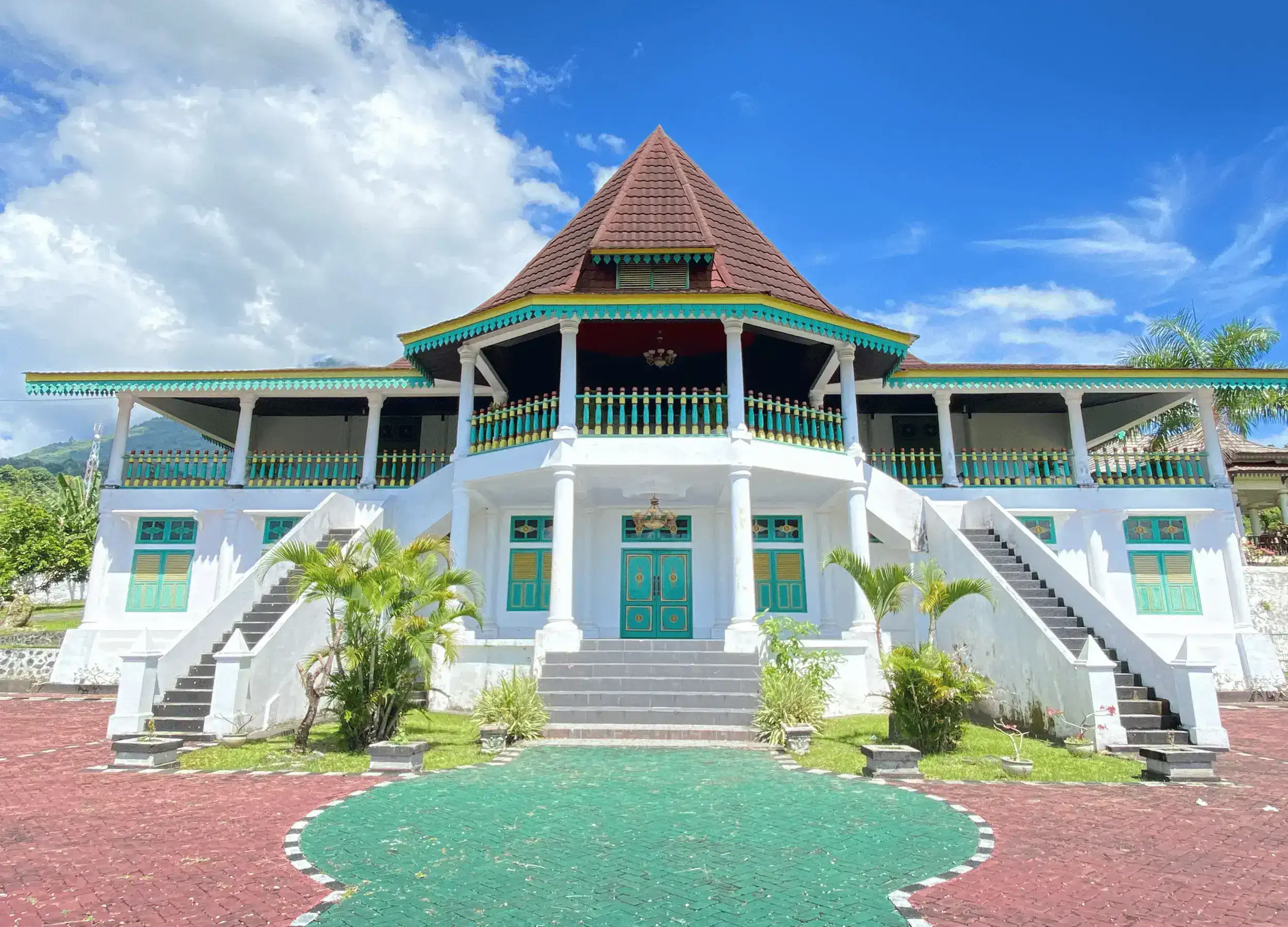
Tidore Sultan’s Palace. (Dion Luas/SeaTrek Sailing Adventures)
During the 16th to 18th centuries, the Tidore Kingdom was one of the most powerful kingdoms in the region, and this Tidore Sultan’s Palace is one of its most important relics. The building, overlooking the open sea, was constructed in 1810 at the initiative and designed by Sultan Tidore Muhammad Tahir, a talented architect and artist.
The palace survived the arrival of the Portuguese, Spanish, and Dutch, who came to control the spice trade in Maluku. However, in 1912, there was an internal conflict in the palace, coupled with Dutch politics, which led to the destruction of the palace.
In 1997, Sultan Djafar Syah initiated the reconstruction of the palace. Finally, in 2004, the palace began to be rebuilt to its original form and completed in 2010. Today, the building is known as a cultural heritage, and anyone can visit it to learn more about Tidore’s past.
13. Ternate Sultan’s Palace
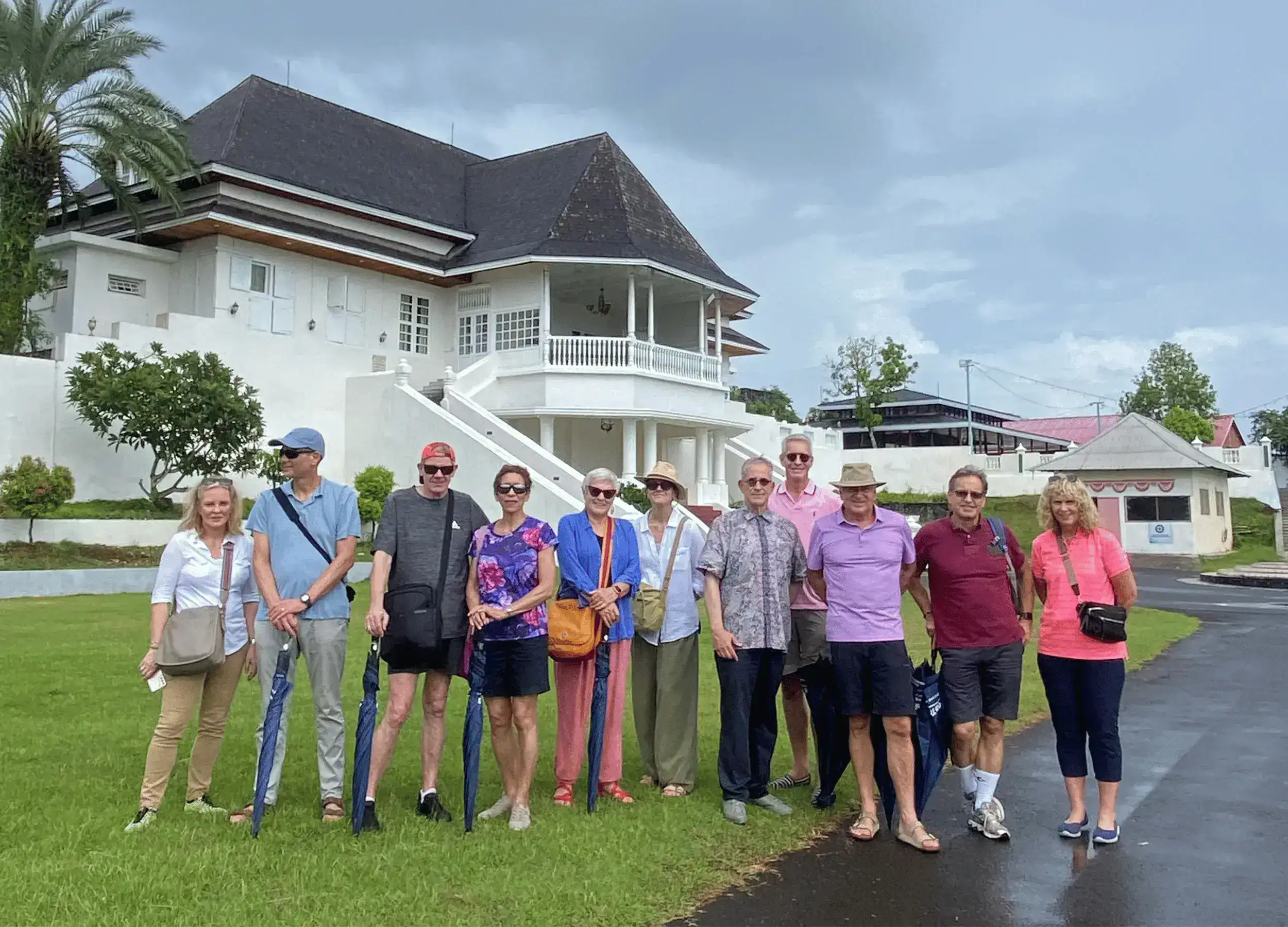
Ternate Sultan’s Palace. (Nita CJ/SeaTrek Sailing Adventures)
The Ternate Sultan’s Palace was built in 1813 by Sultan Ternate, Sultan Muhammad Ali. It’s known as the only traditional building still standing in Ternate city. Historical records indicate the palace’s design mixes Chinese architecture with local culture.
Ternate experienced its golden age during the mid-16th century due to its spice trade and military prowess, and the palace played a crucial role during this era. However, the arrival of the Portuguese marked the beginning of Ternate’s decline. They were not just there to trade but wanted to control the spice trade. They even caused trouble between Ternate and Tidore, leading to a civil war. Then, the Dutch came later and slowly weakened Ternate’s power.
In 1981, The Sultan’s Palace became the Ternate Sultanate Memorial Museum, with the artifacts collection showing the Sultanate’s past. Today, the palace still stands as one of the historical sites to visit for time travel in Ternate.
Plan Your Visit to Historical Sites in Maluku
Visiting the historical sites in Maluku should be on your bucket list if you want to learn more about Indonesia and the spice island’s history. These places are open for anyone to visit, especially if you’re a cultural enthusiast or historian.
Do you plan to visit these historical sites in Maluku and learn more about its history? Contact our team and let’s plan for your Spice Island trip.
 (SeaTrek Sailing Adventures)
 Dion Luas/SeaTrek Sailing Adventures
 (SeaTrek Sailing Adventures)
 (SeaTrek Sailing Adventures)
 (Dion Luas/SeaTrek Sailing Adventures)
 (Dion Luas/SeaTrek Sailing Adventures)
 (Agustina Siringoringo/SeaTrek Sailing Adventures)
 (Anastasia Louhenapessy/SeaTrek Sailing Adventures)
 (Agustina Siringoringo/SeaTrek Sailing Advnetures)
 (SeaTrek Sailing Adventures)