3 Iconic Spices in the Spice Island of Indonesia that Shaped World History
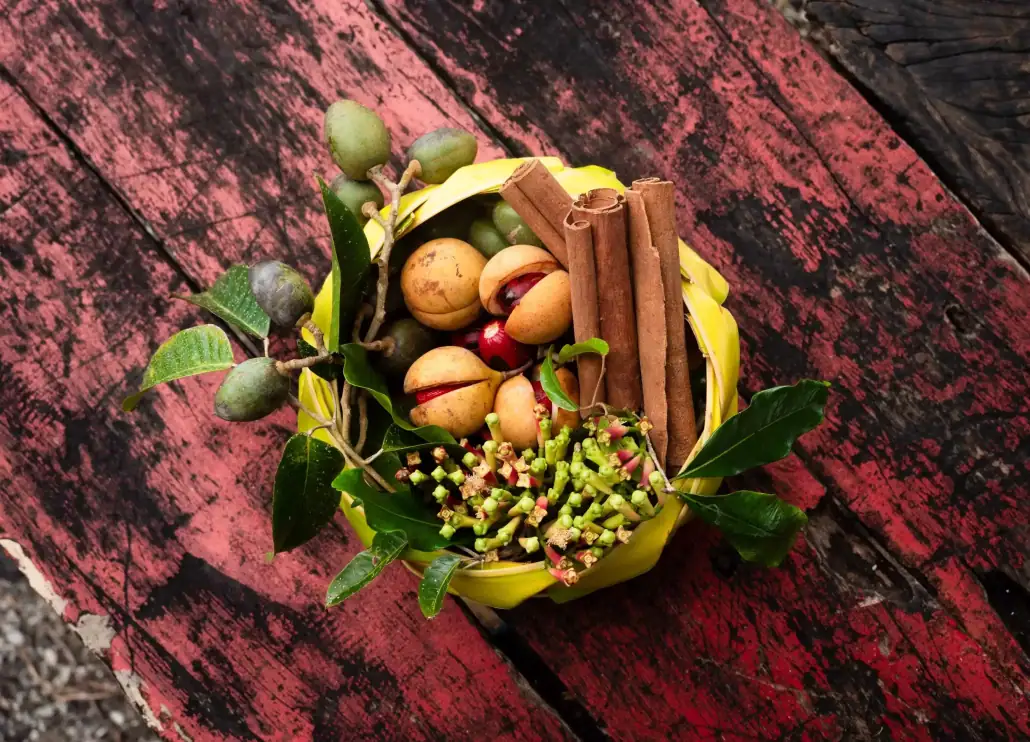 Joshua Edwards/SeaTrek Sailing Adventures
By Abd. Wahab
Today, you might easily find cloves, nutmeg, or mace in your kitchen or the supermarket. But centuries ago, these same spices were treasures that sparked wars, funded empires, and reshaped global history. Native to the remote cluster of islands in Eastern Indonesia known as the Spice Islands or the Maluku Islands, they were once worth more than gold.
Why the Spice Islands Were So Valuable
These spices were rare, growing only in select parts of the Spice Islands of Indonesia. To reach Europe, they had to pass through the hands of many traders, each step driving up the price. By the time cloves or nutmeg reached the tables of European nobility, they had become more than just food flavorings or medicines. They were symbols of wealth and power.
The immense demand for these spices drove European exploration in the 15th century. Adventurers set sail in search of direct access to these islands, leading to monumental voyages, trade rivalries, and even colonial conquest. For the people of the Maluku Islands, this history was both a blessing and a tragedy.
The question is, how could these same spices that you might find in your kitchen today have once had an important role in history?
If you’re curious to learn more about the Spice Islands’ history or are thinking about visiting the Islands, let’s get to know these three iconic spices: cloves, nutmeg, and mace, and how they shaped world history.
3 Iconic Spices in the Spice Islands of Indonesia
Let’s take a closer look at the three spices that changed the world—cloves, nutmeg, and mace—and why they remain so significant today.
1. Cloves (Syzygium aromaticum)

Cloves in the Spice Islands. (Abd. Wahab/SeaTrek Sailing Adventures)
Cloves are the aromatic, sun-dried flower buds of the evergreen Syzygium aromaticum tree. Native to just five Spice Islands, including Makian, Moti, Bacan, Tidore, and Ternate, cloves were once impossible to grow outside of this tropical paradise. The world’s oldest known clove tree, Cengkih Afo, still stands in Ternate today.
Before Europeans arrived, cloves were traded widely by Arab and Chinese merchants. In fact, the Chinese used cloves as early as the 3rd century BCE for fresh breath and oral health. When the Portuguese reached the Spice Islands in the 1500s, cloves enriched empires. But it was the Dutch who later seized control, monopolizing production in the 1600s. Later, the British and French, spreading cloves to other colonies like Zanzibar and Sri Lanka to end the Dutch monopoly.
Cloves weren’t only prized for flavor, but they were valued for their medicinal properties. Clove oil contains eugenol, a natural antiseptic and pain reliever still used in dentistry today.
2. Nutmeg (Myristica fragrans)

Nutmeg in the Banda Islands. (Abd. Wahab/SeaTrek Sailing Adventures)
Unlike cloves, nutmeg grew only in one isolated part of the Spice Islands, in the Banda Islands. Specifically, nutmeg trees thrived on Banda Besar, Banda Neira, Hatta, Ay, Rhun, and a few others. This exclusivity made nutmeg even more coveted. So much so that in 1667, the tiny island of Rhun was exchanged by the British for Manhattan in the famous Manhattan Transfer treaty with the Dutch.
But the nutmeg trade also carried a darker story. In 1621, under the leadership of Jan Pieterszoon Coen, the Dutch East India Company committed genocide against the Banda people to secure monopoly control of the spice. Today, this tragic history is remembered in the Spice Island’s forts and historical sites.
Despite its violent past, nutmeg remains beloved for its taste and health benefits. It has long been used in remedies for indigestion, colds, and memory improvement. Culinary uses span from garam masala to pumpkin spice, and nutmeg is even believed to be one of Coca-Cola’s secret ingredients.
3. Mace (The Golden Spice)

Sundried mace in the Banda. (Abd. Wahab/SeaTrek Sailing Adventures)
Mace is a part of nutmeg, but they are sold separately. Came from the same fruit of the same tree, Myristica fragrans, where nutmeg is known as the seed of the fruit, and mace is the red aril that covers the seed. These spices were both prized for their own unique value. Initially, mace was treated as a byproduct of nutmeg, but it became valuable due to its greater quantities of essential oil than nutmeg.
When dried, mace turns from red to a golden-orange color and develops a lighter, milder, and sweeter flavor than nutmeg. Historically, it was more expensive and rarer than nutmeg because each fruit produces only a small amount of mace.
Besides their difference in taste and contents, mace requires a more careful treatment and harvesting process. Its fragility needs a manual human touch to separate that red skin from the seed. This additional process is also the reason that made mace more expensive and made it necessary to sell it separately as a different product from nutmeg.
Why Visit the Spice Islands Today?
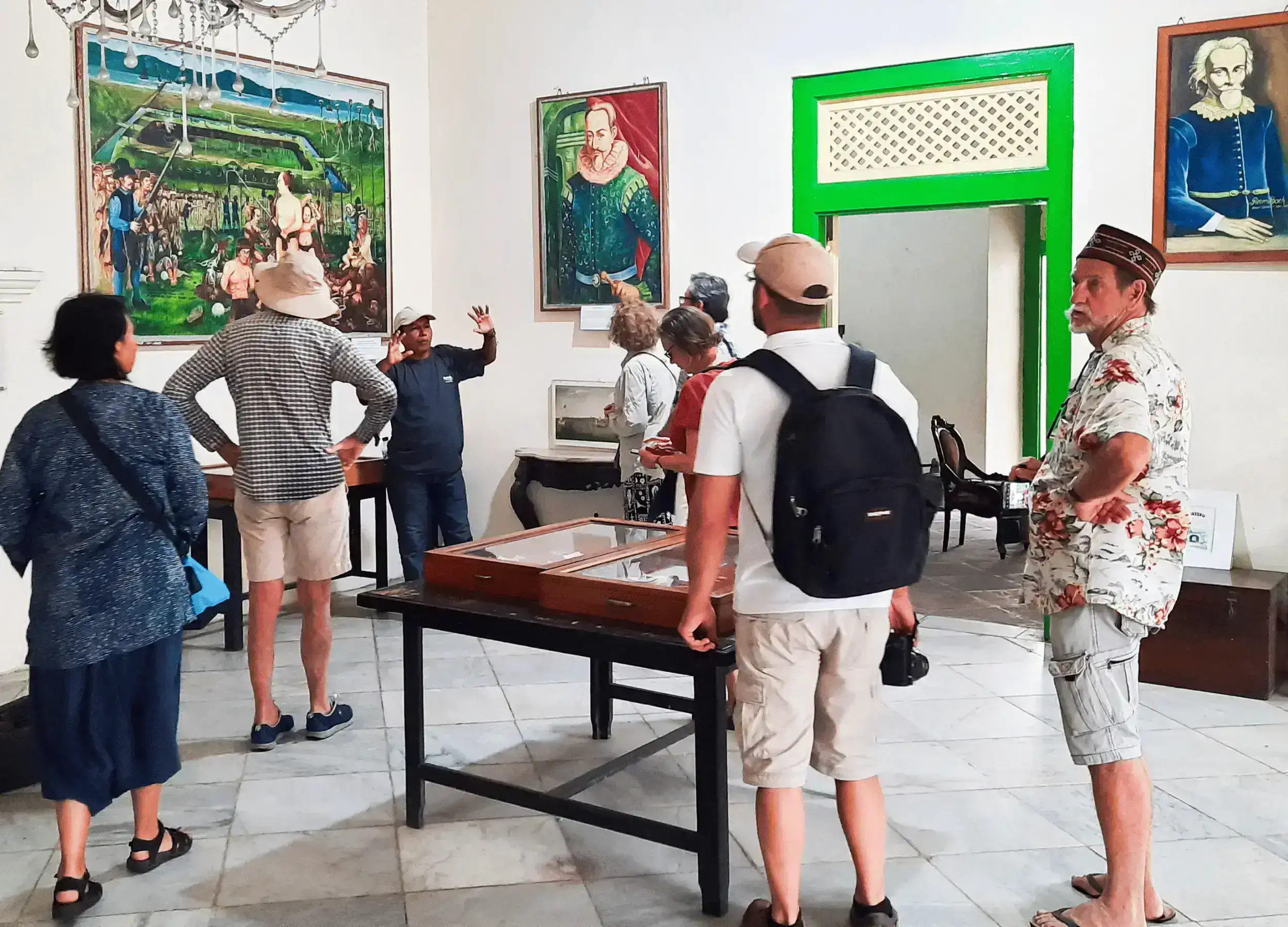
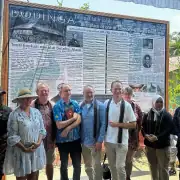
SeaTrek guests at the Spice Islands Museum in Banda Neira. (Abd. Wahab/SeaTrek Sailing Adventures)
The history of the Spice Islands of Indonesia is told in countless books, but nothing compares to standing on the islands themselves. Walking through Banda Neira’s old forts, seeing nutmeg orchards, and sailing between volcanic isles brings history to life in unforgettable ways.
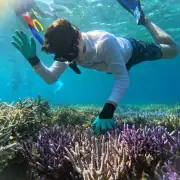
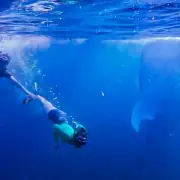
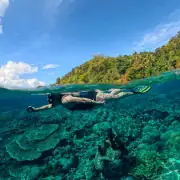
The Spice Islands are more than just history. They are a living blend of cultural heritage and natural beauty. Here, you’ll encounter vibrant coral reefs, lush forests, and warm island communities alongside centuries-old trade stories.
At SeaTrek Sailing Adventures, we go beyond sightseeing. With local guides and our onboard historian expert, we take you deeper into the story of the Spice Islands, where history, nature, and culture meet.
Plan Your Spice Islands Exploration with SeaTrek
Are you ready to explore the legendary Spice Islands of Indonesia? Whether you’re a history enthusiast, a food lover, or an adventurer, a journey here will transform the way you see the world.
Join us on our next The Rare Routes cruise and discover firsthand the islands that changed history forever
 (Vincent Chalias/SeaTrek Sailing Adventures)
 (Antonin Borgeaud/SeaTrek Sailing Adventures)
 (Agustina Siringoringo/SeaTrek Sailing Adventures)
 (Anastasia Louhenapessy/SeaTrek Sailing Adventures)
 (SeaTrek Sailing Adventures)
 (Agustina Siringoringo/SeaTrek Sailing Adventures)
 (Agustina Siringoringo/SeaTrek Sailing Adventures)
 (Dion Luas/SeaTrek Sailing Adventures)
 (Yi-Kai Tee/SeaTrek Sailing Adventures)
 (Agustina Siringoringo/SeaTrek Sailing Adventures)