Textile Protectors in Eastern Indonesia: Thriving In Tradition
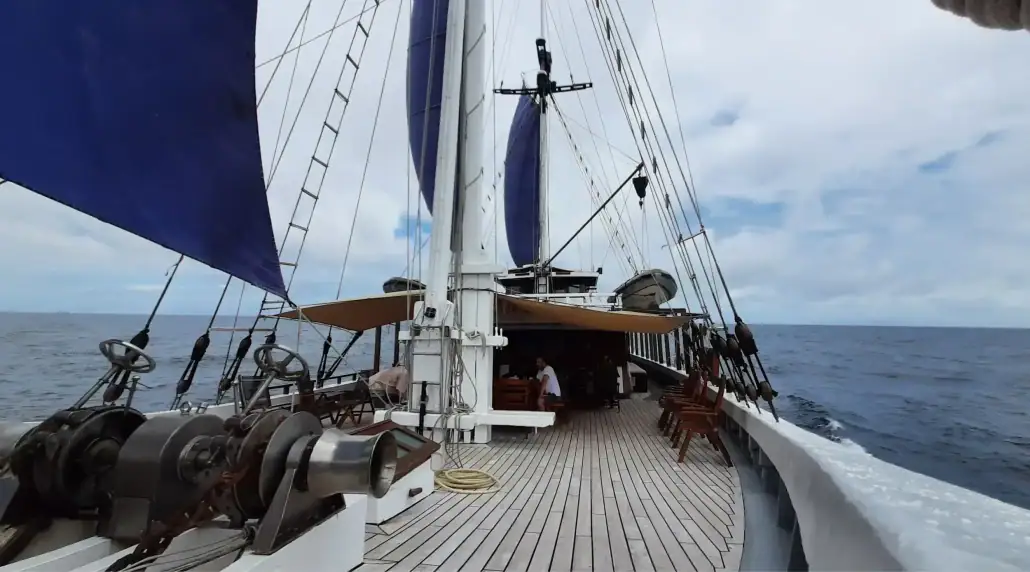 (Abd. Wahab/SeaTrek Sailing Adventures)
By Gavin Gallagher
Traditions remain a living part of everyday life, celebrated through vibrant textiles, rituals, ancient architecture and dance that connect villagers with their ancestors. To experience these rich cultures firsthand, one must travel off the beaten path as myself and my wife, Yuyun, did earlier this month while sailing to the Spice Islands.
Not only do you have to travel to, you have to connect with the tribes which we found surprisingly easy when visiting the Sikka, Abui and Alorese people of eastern Indonesia. These warm and welcoming people are protectors of their ancestor’s legacy and are thriving while doing so.
The Sikka
The Sikka, famed for their intricate ikat weaving, textiles are not only a craft but a visual narrative. The ikat motifs tell stories of their ancestors, of the mountains and spirits that watch over them. Each piece carries the essence of the earth, dyed with natural indigo, turmeric, tree bark and betel leaves, a reflection of the land and sea they call home.
Alongside weaving, traditional dances are performed in celebration of the village’s spiritual heritage. The “Tua Reta Lou” dance is a symbolic battle dance, where a warrior aloft a length of bamboo is responsible to keep lookout and give the order to either attack or stay on the defensive. The dance and textiles share a deep connection—the weavers’ hands telling the stories that the dancers bring to life.
The Abui
On sailing to the western area of Alore the Abui tribe are the largest ethnic group of the island. Feared headhunters until the early 80’s, they nowadays welcome visitors to their traditional villages who come to witness their sacred performances with respect and understanding. The fierce “Cakalele” dance these warriors perform as you enter their village remains unnerving yet very beautiful to this day. The Abui are farmers and hunters and barter their crop and meat for “Tangkai” sarongs in a pattern that is specific to their tribe which are worn during their sacred performances, rituals and ceremonies.
Another such dance is the “Lego Lego” which represents unity, strength, and the community’s connection to the land. The “Lego Lego” can last for days where participants can tap out for a rest or to feed their children. When somebody taps out, they are replaced with a member of the community who has just been for their rest.
It was wonderful to spend time in the village, talking with families, our guide was always available to translate. They don’t use electricity by choice and their pyramid-shaped homes called “Lopo” are thatched, made of bamboo, and have 4 levels. 1st is used as a living room, 2nd to cook and sleep, 3rd for storing food, and the 4th is used to hold valuables like their “Moko” brass drums used in ceremonies. On being invited in you can see how the ancient architecture is very functional, cooling and fits their needs.
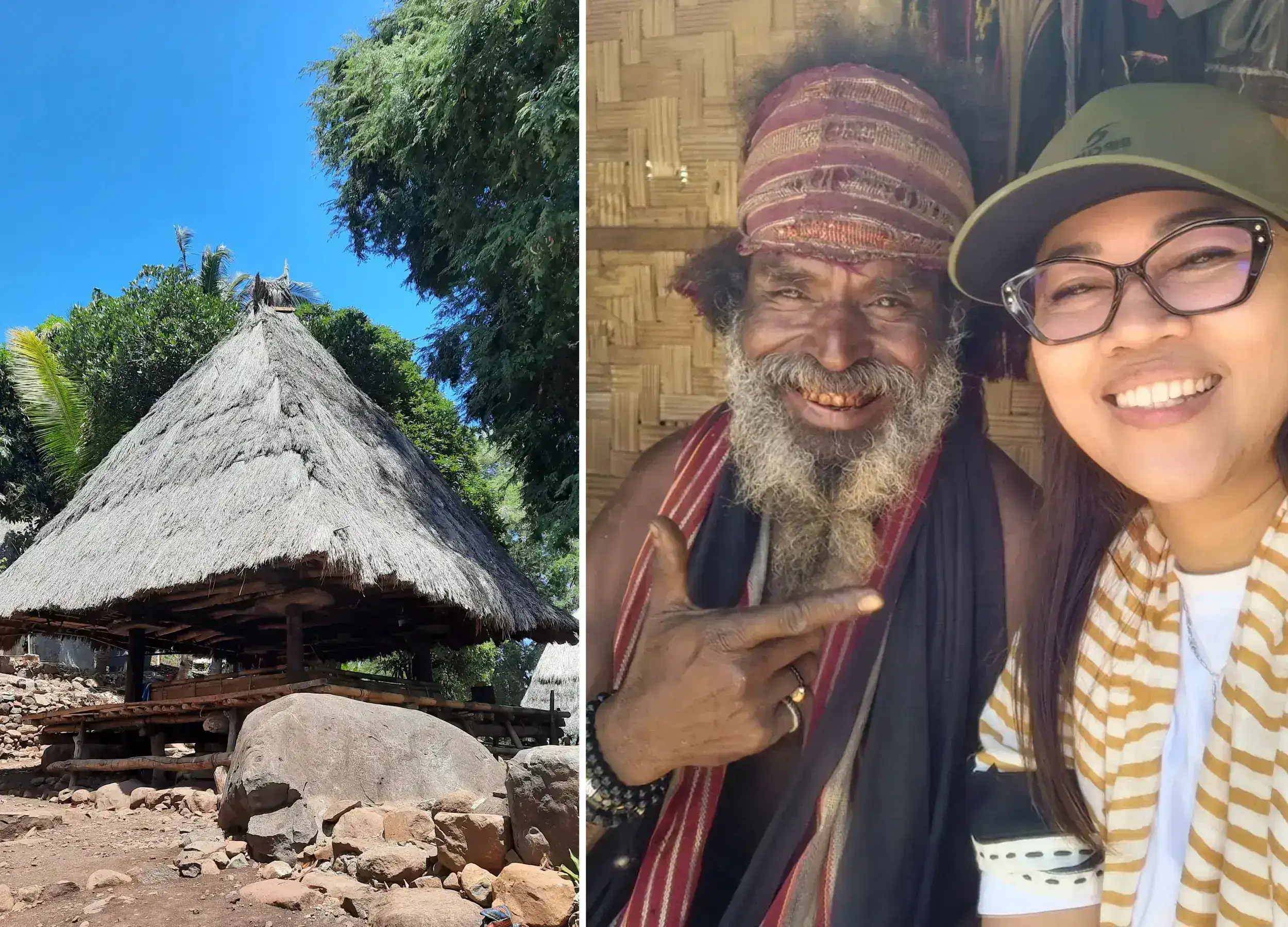
Right: The traditional house of the Abui Tribe in Alor. Left: Yuyun with the Abui Tribe Chief in Takpala village. (Yuyun Gallagher/SeaTrek Sailing Adventures)
The Alorese
Venturing on to visit the Alorese tribe standing as guardians of ancestral wisdom, its weavers, masters of creating textiles rich in symbolism. The weavings of the Alorese tell the stories of their ancestors’ journey across the sea, the struggles with nature, and their bond with the island’s spirits. Their colors are bold—deep reds and blacks, embodying strength, protection, and unity.
The women work under the guidance of the elders, who teach them not only the techniques but the stories behind each pattern. Differing from the Sikka, the Alorese use natural dye harvested from sea creatures such as sponges and Nudibranchs. We both found the experience intoxicating and had to buy some Ikat as a memento of our travels and took pictures with the weavers who had made the thread, dye and wove the final textiles. Wonderful!!!
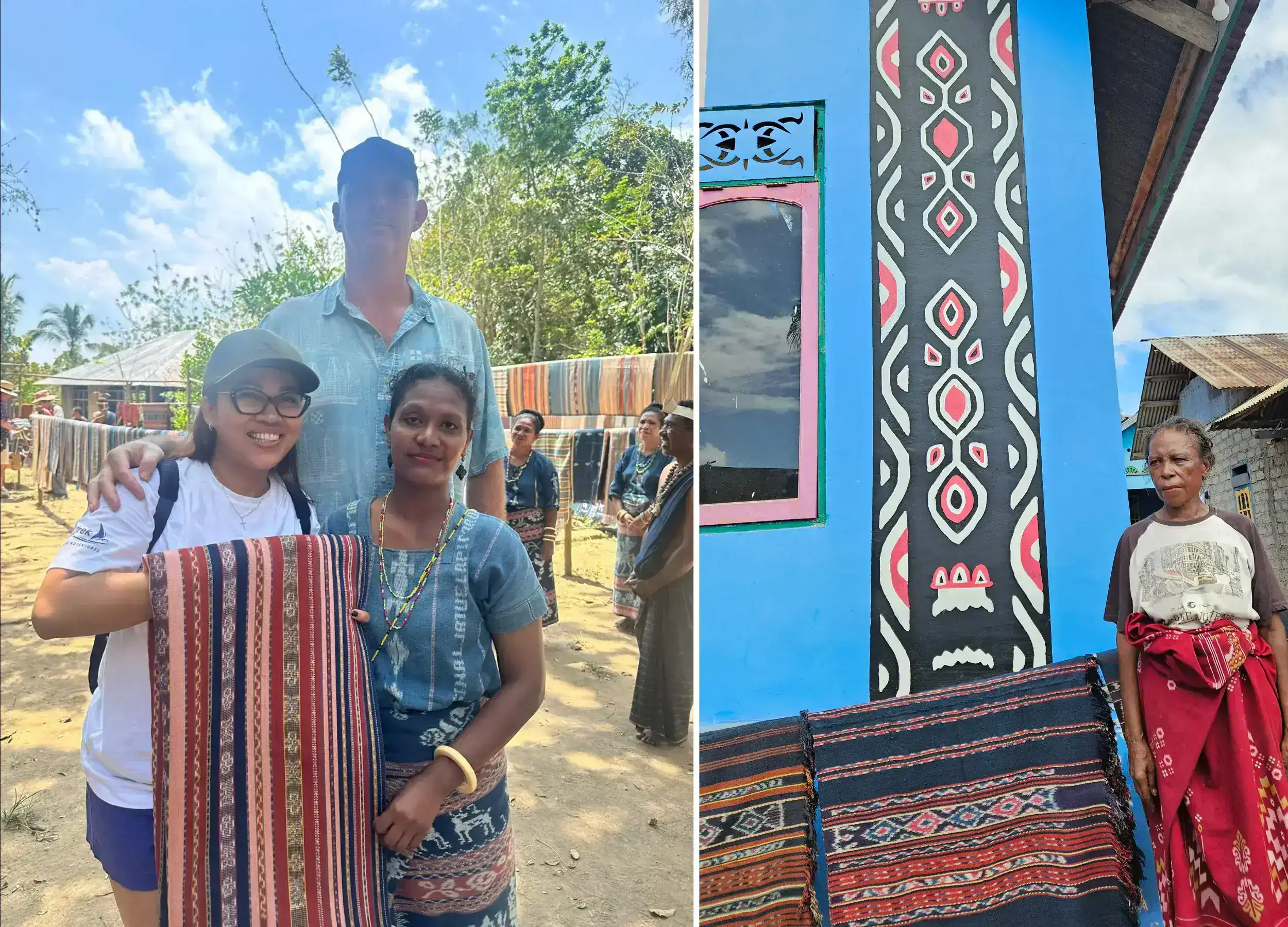
Left: The ikat we purchased with its weaver in Watublapi village, Right: The weaver of another ikat we purchased in Umapura village, some of the ikats pattern is reflected on her house. (Yuyun Gallagher/SeaTrek Sailing Adventures)
Myself and Yuyun traveled to visit these isolated communities, however the journey ended up being a lot more than just about visiting remote islands but becoming part of an ancient story told through textile, dance, and tradition. The Sikka, Abui and Alorese people are happy to open their world to those who seek to understand—not just to see—and our path ensured that these connections were as meaningful as the traditions that tie their worlds together.
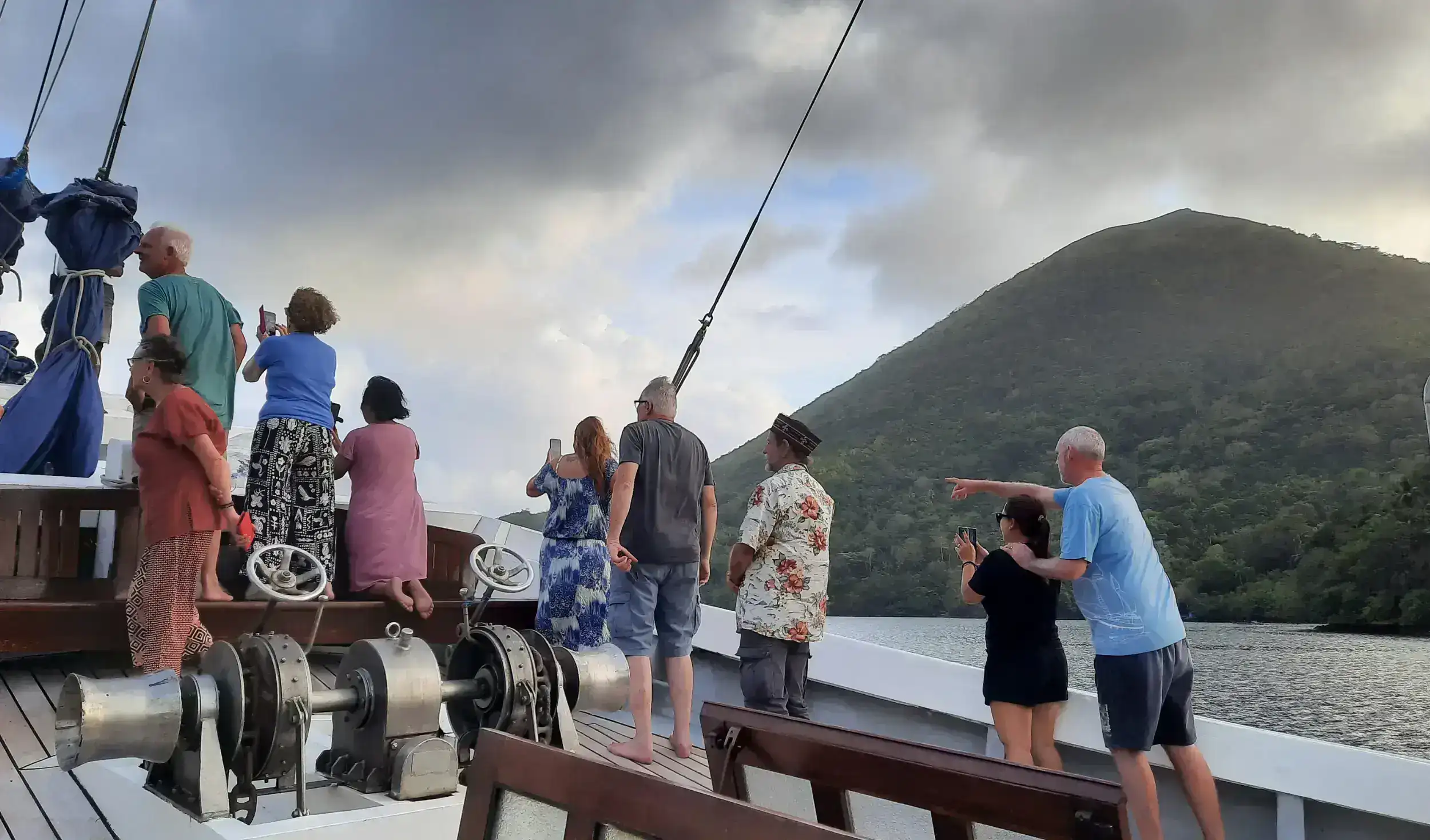
Arriving into Banda Neira port. (Abd. Wahab/SeaTrek Sailing Adventures)
 (SeaTrek Sailing Adventures)
 (SeaTrek Sailing Adventures)
 (Dion Luas/SeaTrek Sailing Adventures)
 (Anastasia Louhenapessy/SeaTrek Sailing Adventures)
 (SeaTrek Sailing Adventures)
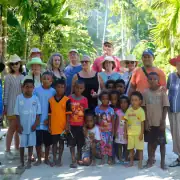 (Dion Luas/SeaTrek Sailing Adventures)
 (Vincent Chalias/SeaTrek Sailing Adventures)
 (Dion Luas/SeaTrek Sailing Adventures)
 (Abd. Wahab/SeaTrek Sailing Adventures)