• Link to Facebook
  • Link to Instagram
  • Link to Youtube
  • Link to LinkedIn
  • Link to Rss Link to Rss Link to Rss
  • Schedules
  • About Us
    • Our Company
      • Who We Are
      • Our Ships
      • Sailing for Good
    • Our Experiences
      • SeaTrek Experience
      • FAQs
    • Our People
      • Tour Leaders
      • Experts
      • Our Crew
      • Local Heroes
  • Our Cruises
    • All Cruises
    • Schedules
    • Super Trips
    • Charters
  • Media
    • News & Stories
    • In the Press
    • SeaTrekker Magazine
    • Gallery
    • Videos
  • Contact
  • Click to open the search input field Click to open the search input field Search
  • Menu Menu
Expert Led, Nature Lovers

Can Whale Sharks See In The Dark?
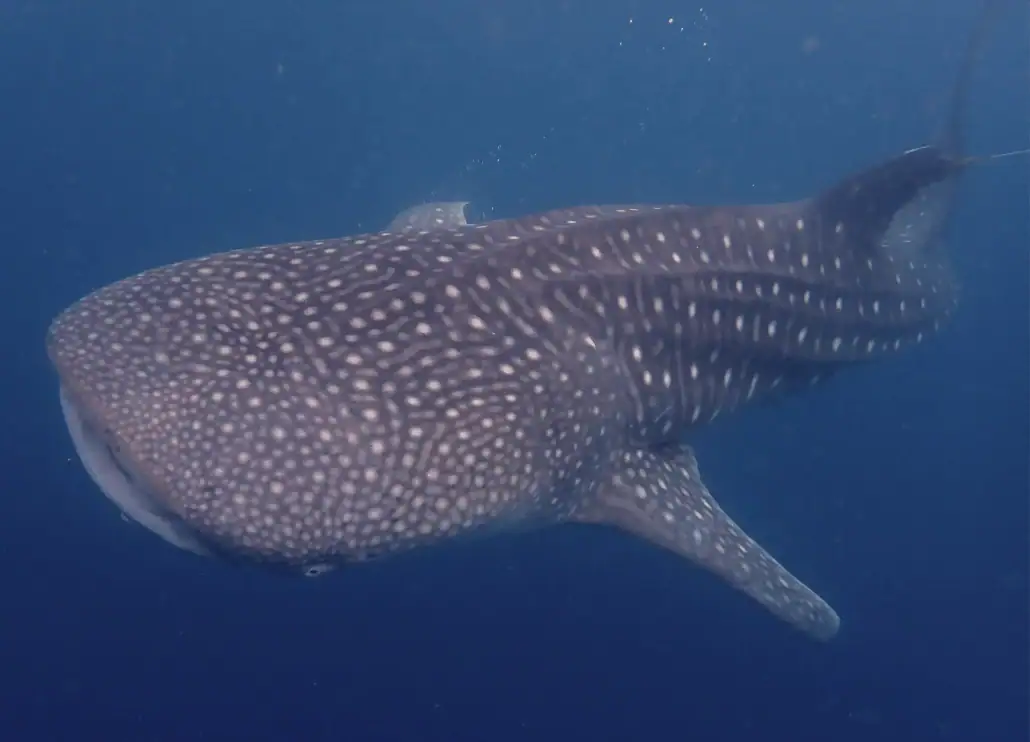
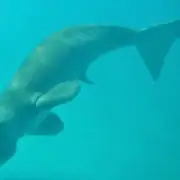
Whale shark(Anastasia Louhenapessy/SeaTrek Sailing Adventures)

By Vincent Chalias

Can whale sharks see in the dark? The answer is yes.

The eyes of whale sharks, the biggest fish on the planet, are able to see in the pitch black deep sea due to a mutation in their retinas that causes night blindness in humans, a team of Japanese researchers has said.

Genetic Mutation

The genetic mutation in the whale shark’s eyes activates visual pigments that sense blue light, the only colour that reaches the deep sea, based on temperature changes, according to researchers from the National Institute of Genetics, Osaka Metropolitan University, Okinawa Churashima Foundation and the RIKEN Center for Biosystems Dynamics Research.

Whale sharks are known to swim near the surface of the ocean to feed on plankton, but they also dive into deep waters at depths of nearly 2,000 meters and much of their biology remains a mystery.
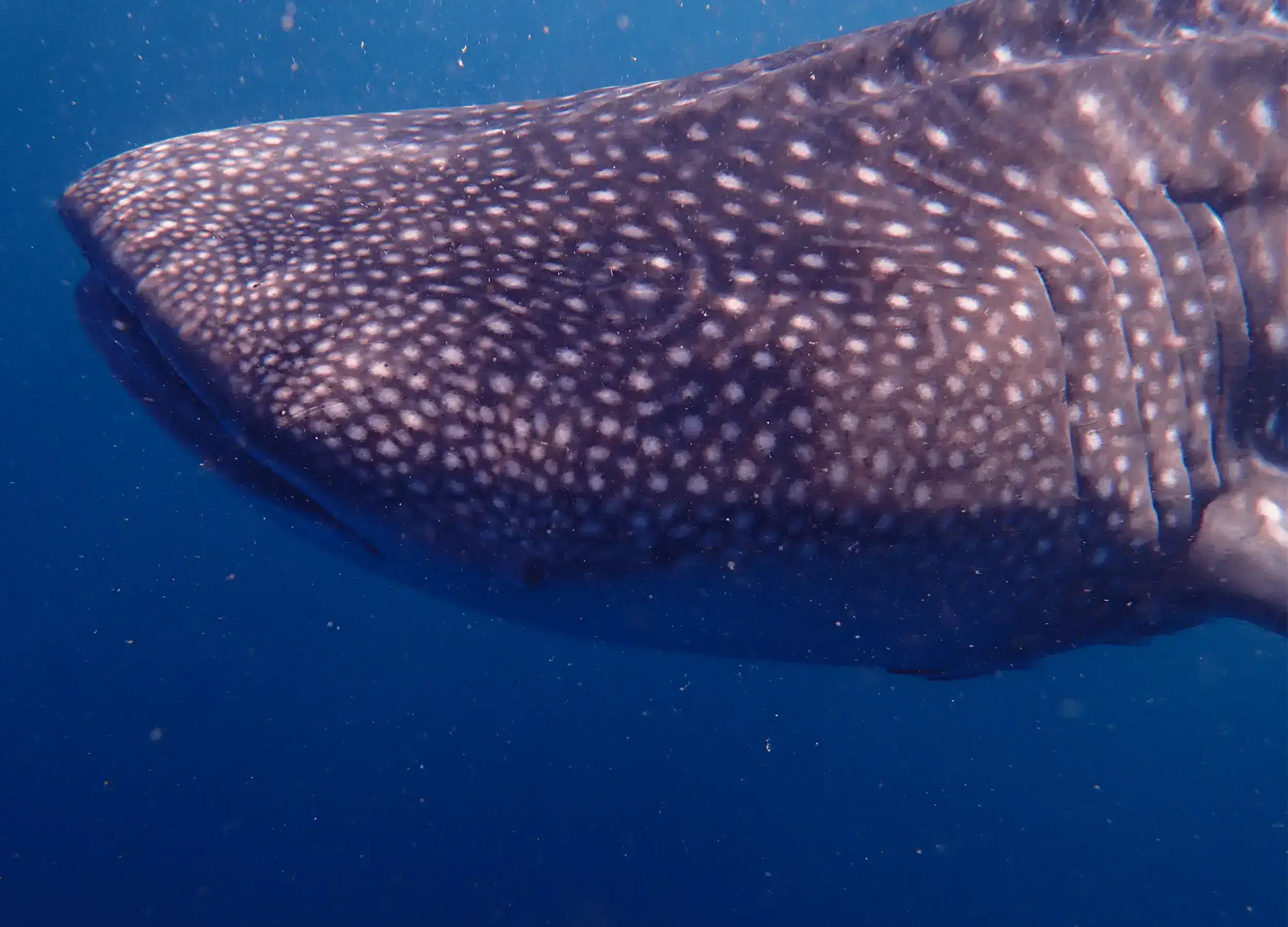
Whale shark eyes

Whale shark eyes. (Dion Luas/SeaTrek Sailing Adventures)

To better understand how the creatures are able to see in both bright surface waters and the darkness of the deep sea, researchers focused on rhodopsin, a protein in the retina of the eye that enables vision in dimly lit environments.

They found that rhodopsin, normally sensitive to green light, had mutated to become sensitive to blue light in whale sharks, with the amino acid composition of the protein unique to the species.

A genetic alteration in the same amino acid site in humans causes congenital stationary night blindness, a condition that impairs vision in low-light situations.

The findings, published in the Proceedings of the National Academy of Sciences on March 21, suggest that whale sharks’ blue light-sensing pigments adapt according to temperature.

“While the rhodopsin in whale sharks degrades when exposed to heat, it functions effectively in the chilly waters of the deep sea,” said Shigehiro Kuraku, a professor at the National Institute of Genetics involved in the study.
Share this entry
  • Share on Facebook
  • Share on WhatsApp
  • Share on Pinterest
  • Share on LinkedIn
  • Share on Reddit
  • Share by Mail
  • Visit us on Yelp
You might also like
Two giant whale sharks near the bagan.(Brad Hays/SeaTrek Sailing Adventures) Whale Sharks: Meet the Largest Fish in the World
Phinisi Boatbuilder village in Wera Sumbawa(SeaTrek Sailing Adventures) Wera: Home of the Traditional Boat Building in Sumbawa
Kahayan River of Borneo(David Metcalf/SeaTrek Sailing Adventures) Borneo’s Heart: A Journey up the Kahayan River
Patti snorkeling with two whale sharksAgustina Siringoringo/SeaTrek Sailing Adventures From National Geographic Dreams to Real-Life Wildlife Adventures

Joanne hunt group photo with fellow SeaTrek guests(SeaTrek Sailing Adventures) Third Adventure and Counting
Rowland and Sue Hill family holiday with Katharina(Anastasia Louhenapessy/SeaTrek Sailing Adventures) We Chartered Katharina for Our Dream Family Holiday Trip
A big male Bornean orangutan sitting on the tree(Agustina Siringoringo/SeaTrek Sailing Adventures) Bornean Orangutan Facts and How to See Them in Their Natural Habitat 
Maura with SeaTrek's Katharina ship sails up(SeaTrek Sailing Adventures) Two Poems by Maura Mazzer from Komodo-Bali Trip 

The journey that stays with you

“We sail beyond the familiar, into remote seas and lesser-known shores. Adventure unfolds naturally, one island and encounter at a time. If this way of traveling speaks to you, we’d love to hear from you.”

  • Calendar Calendar

    Book An Initial Call
    Available anytime

  • Email Support
    info@seatrekbali.com

Home›News & Stories›Expert Led›Can Whale Sharks See In The Dark?

Our Company

  • Who We Are
  • Our Ships
  • Sailing for Good

Our Experiences

  • SeaTrek Experience
  • FAQs

Our People

  • Tour Leaders
  • Experts
  • Our Crew
  • Local Heroes

Our Cruises

  • All Cruises
  • Schedules
  • Super Trip
  • Charters

Media

  • News & Stories
  • In the Press
  • SeaTrekker Magazine
  • Gallery
  • Videos

Contact & Policies

  • Contact Us
  • info@seatrekbali.com
  • Website Terms of Use
  • Booking Terms & Conditions
  • Charter Terms & Conditions

Our Company

Who We Are
Our Ships
Sailing for Good

Our Experiences

SeaTrek Experience
FAQs

Our People

Tour Leaders
Experts
Our Crew
Local Heroes

Our Cruises

All Cruises
Schedules
Super Trip
Charters

Media

News & Stories
In the Press
SeaTrekker Magazine
Gallery
Videos

Contact & Policies

Contact Us
info@seatrekbali.com
Website Terms of Use
Booking Terms & Conditions
Charter Terms & Conditions

2026 © SeaTrek Sailing Adventures. All rights reserved.
  • Link to Facebook
  • Link to Instagram
  • Link to Youtube
  • Link to LinkedIn
  • Link to Rss Link to Rss Link to Rss
Link to: Fish Poo: Probiotics for Corals Link to: Fish Poo: Probiotics for Corals Fish Poo: Probiotics for Coralsparrotfish eating corals Link to: A Hydrothermal Vent Reveals an Interesting Coral Hot Spot! Link to: A Hydrothermal Vent Reveals an Interesting Coral Hot Spot! Healthy coral garden in Indonesia(Vincent Chalias/SeaTrek Sailing Adventures)A Hydrothermal Vent Reveals an Interesting Coral Hot Spot! Scroll to top Scroll to top Scroll to top